

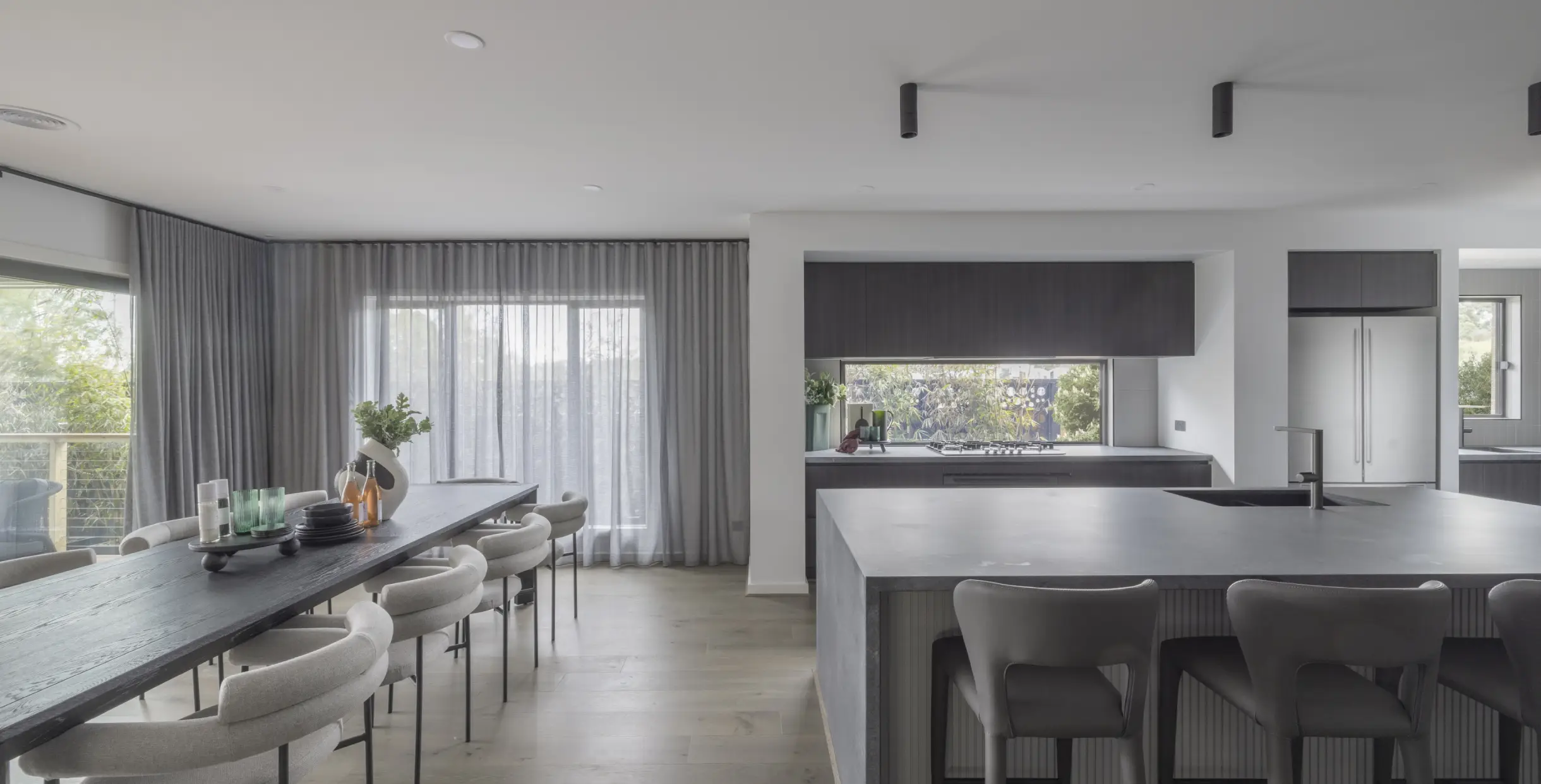



Living by the coast is a luxurious lifestyle filled with fresh air, wide skies and beautiful light. It also brings challenges for soft furnishings. Salt spray, strong sun and humid conditions can shorten the life of curtains and fade colours, which makes it essential to choose the right fabrics, linings and hardware, and follow a simple maintenance routine to preserve the look and performance of your curtains and avoid costly replacements.
Why Coastal Conditions Matter for Curtains
Living near the ocean changes how your curtains age and perform. Salt air settles on fabrics and hardware, leaving gritty deposits in fibres and accelerating corrosion on brackets, tracks and rods. Strong sunlight bleaches dyes, breaks down fibres and weakens seams, so a fabric that looks fine inland may become thin and faded much sooner by the sea. Humidity and dampness encourage mildew, musty odours and faster soiling, particularly in rooms with poor ventilation.
These three factors interact. Salt residues attract moisture, which makes mildew more likely. Fading weakens fibres, which makes them more vulnerable to abrasion from trapped grit. That means you should choose materials for longevity and ease of cleaning, not only for appearance. Think about UV-resistant or solution-dyed fabrics, moisture-wicking or quick-dry fibres, and linings that shield the face fabric. Also consider corrosion-resistant hardware and finishes designed for marine exposure. Small, practical choices will avoid frequent replacements and keep curtains looking and working well for years.

Key Fabric Properties to Prioritise
When choosing curtain fabrics, ask about:
- Fade resistance: Look for fabrics with good lightfastness and UV protection ratings. Polyester and acrylic blends tend to resist fading better than many natural fibres. Fabrics treated with UV stabilisers perform even better.
- Moisture resistance: Synthetic fibres absorb less moisture than cotton and linen. Less absorption means quicker drying and less mildew risk.
- Mould and mildew resistance: Some fabrics are treated to resist microbial growth. This treatment helps in humid climates.
- Durability: High-twist yarns, tight weaves and performance coatings increase abrasion resistance and strength.
- Cleanability: Choose fabrics that tolerate gentle spot cleaning, vacuuming and professional laundering. Avoid fabrics that hold salt residues or trap odours.
Best Fabric Options
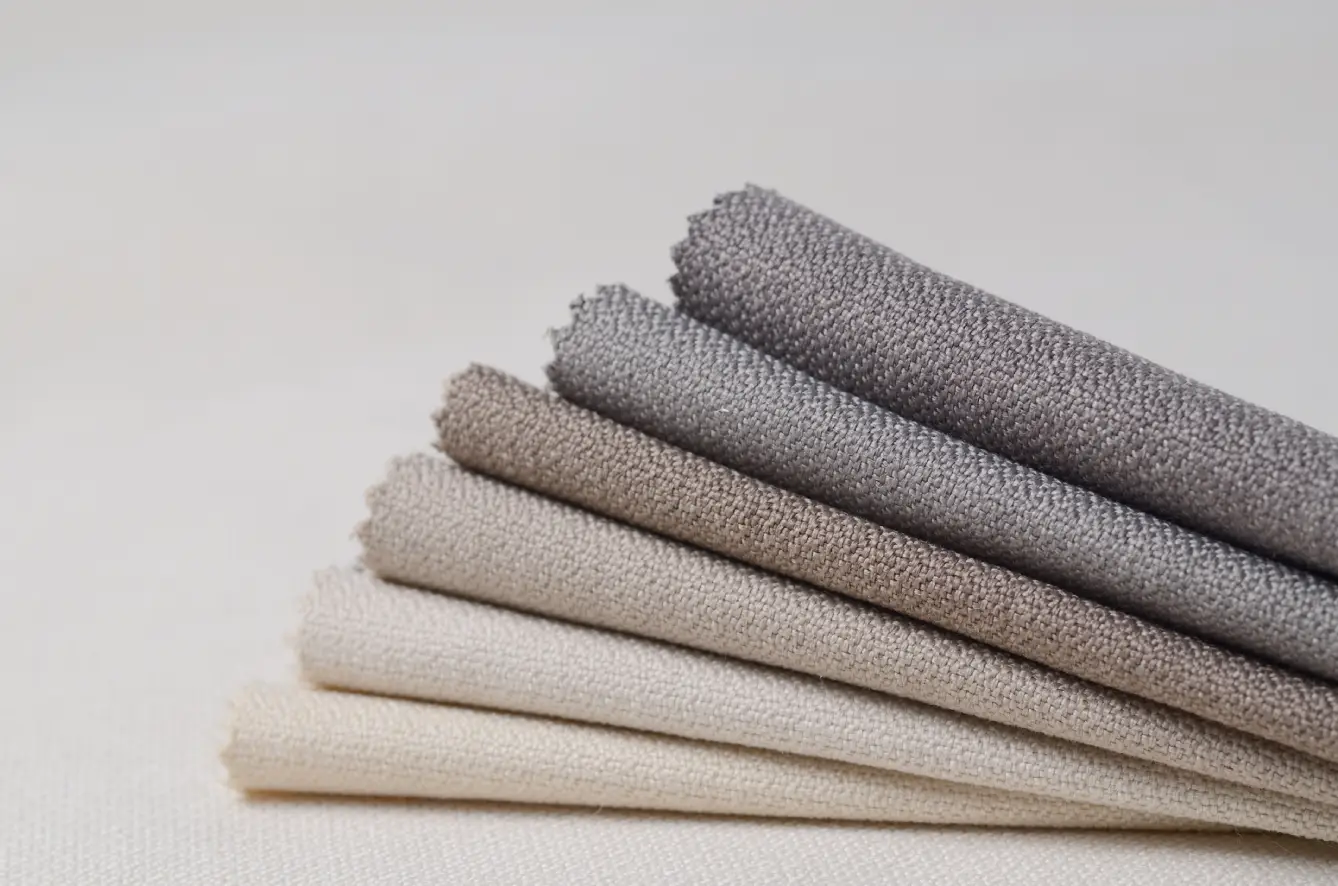
- Polyester and polyester blends: Polyester resists UV damage better than many natural fibres. It dries quickly and tolerates cleaning well. Blends with cotton or linen offer a softer hand while keeping performance benefits.
- Acrylic and solution-dyed acrylic: Solution-dyed acrylic offers excellent colourfastness and UV resistance. It performs well in direct sunlight and resists fading for longer. This material works well for rooms that get a lot of sun.
- Treated natural fibres: If you prefer the look of linen or cotton, choose fabrics with water-repellent or fungal-resistant treatments. These finishes add protection while keeping the natural texture.
- Performance fabrics: Technical performance fabrics combine synthetic fibres with specialised finishes. They resist stains, moisture and mildew. Many maintain a soft feel and modern appearance.
- Heavy linings and interlinings: A dense lining improves thermal performance and light control. It also shields the decorative fabric from UV and salt exposure. Consider thermal or blackout linings to protect both fabric and interior furnishings.
Curtain Linings Matter Too
Lining choice makes a big difference to how curtains handle coastal conditions. The right lining keeps salt spray and UV off the face fabric, adds privacy, and reduces heat transfer so rooms stay cooler in summer and warmer in winter. It also stabilises drape, so curtains hang better and suffer less wear where they meet the track or rod.
- Cotton-backed thermal lining
This gives a natural feel, breathability and modest insulation. Look for a lining with a cotton backing and a thermal coating or foam layer if you want improved R-value. It helps stop heat entering through sun-facing windows while still letting the fabric breathe, which reduces trapped moisture and mildew risk. - Polyester or blockout lining
Use polyester-backed linings where moisture resistance matters. Blockout linings are thicker, stop light and provide the best protection from UV and salt. They dry quickly and tolerate regular cleaning. Choose a polyester lining with a tight weave and quality finish for coastal exposures. - Interlining (additional middle layer)
Interlining adds weight and a thermal buffer between face fabric and lining. It protects delicate fabrics from sun damage, improves acoustic performance, and gives a fuller, more luxurious drape. For very sunny or exposed rooms, select a mid-weight interlining that is breathable but dense enough to shield the face fabric.
Hardware and Curtain Track Systems
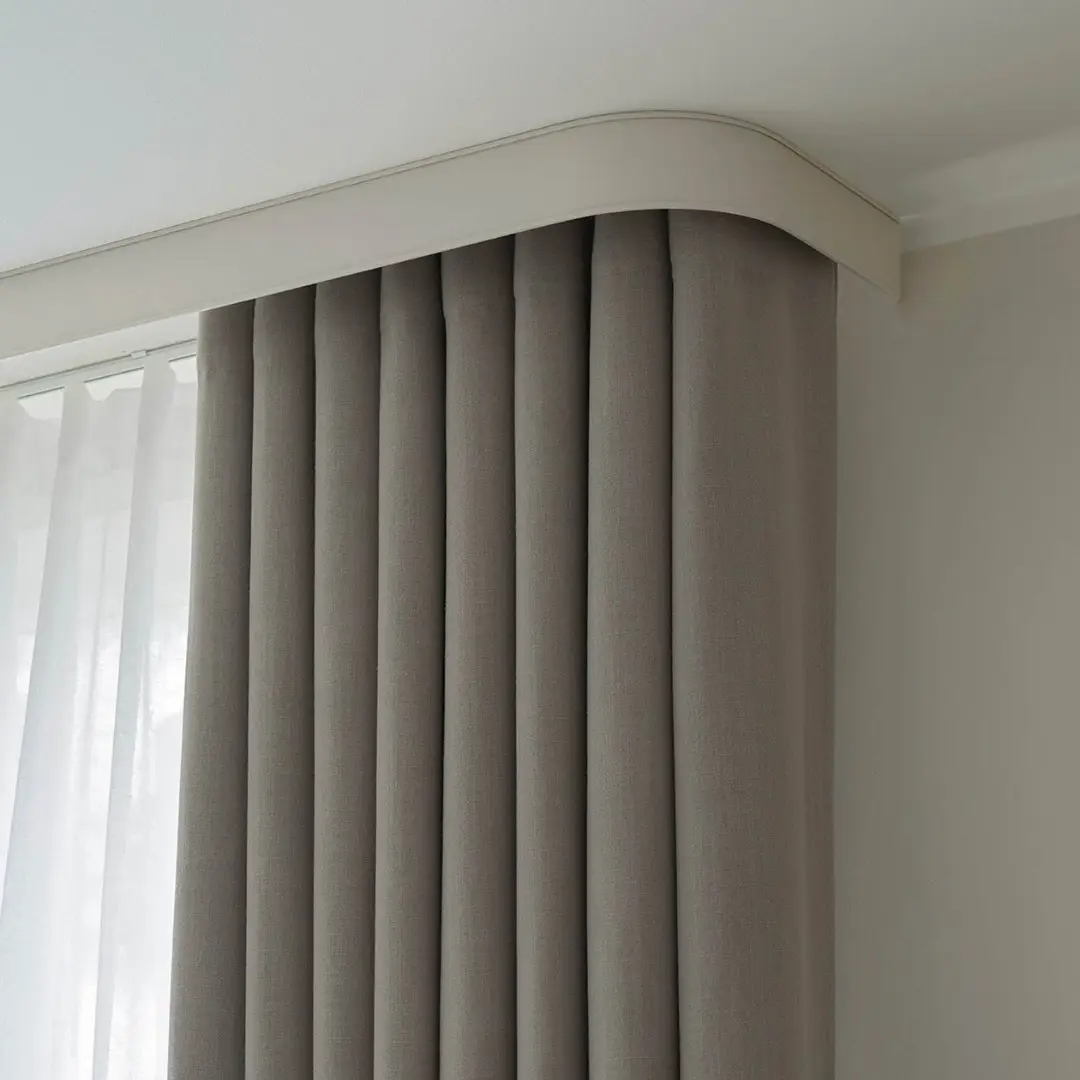
In addition to choosing the right fabrics, you’ll also benefit from high-performance curtain track systems. Salt-laden air and humidity speed up rust and pitting on regular metal fittings, so choose corrosion-resistant hardware designed for coastal use.
- Stainless steel components where visible or exposed to salt.
- Aluminium tracks with protective coatings.
- Powder-coated or anodised finishes for durability.
- For smooth operation, select high-quality carriers and bearings.
Curtain Colour and Pattern Choices
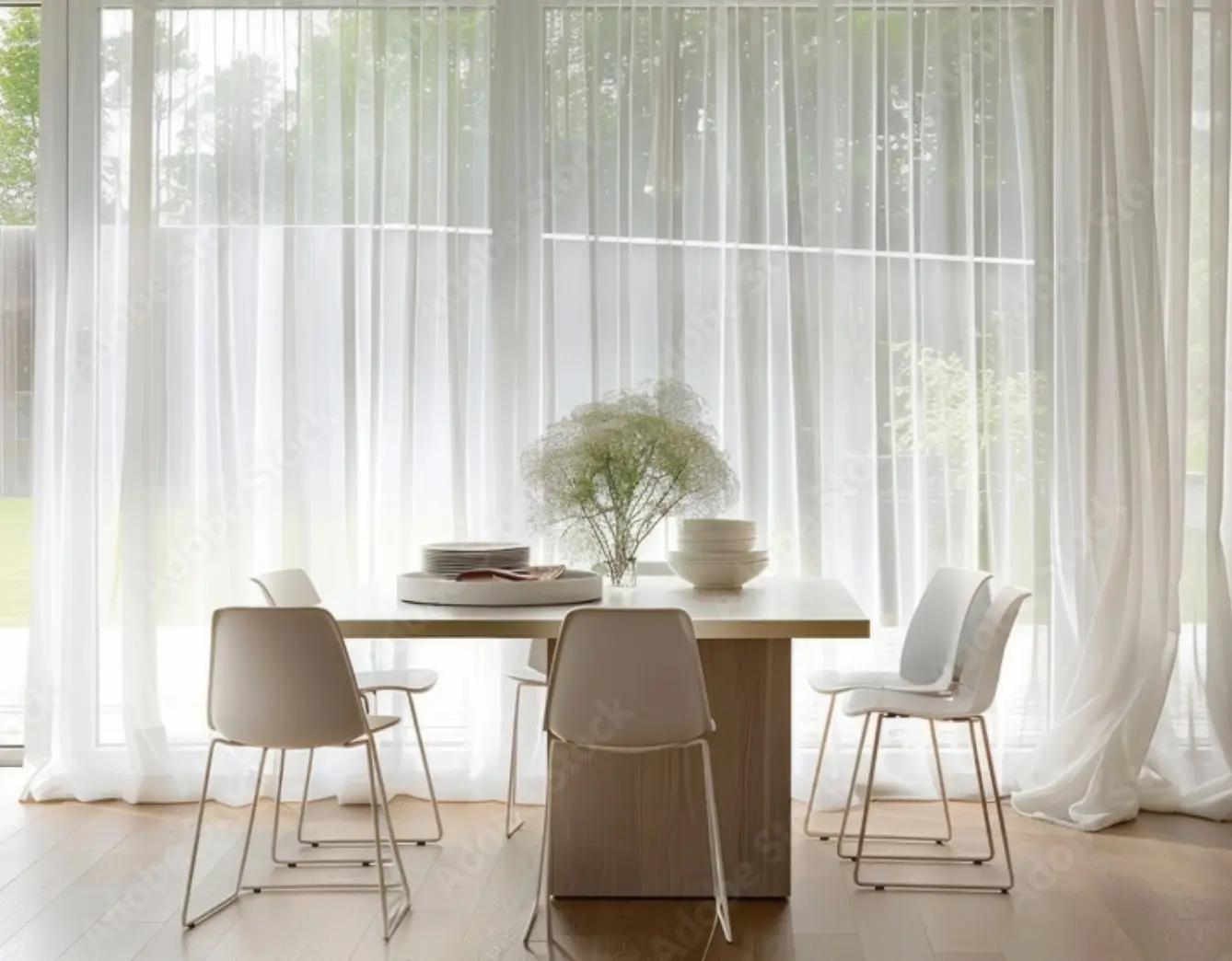
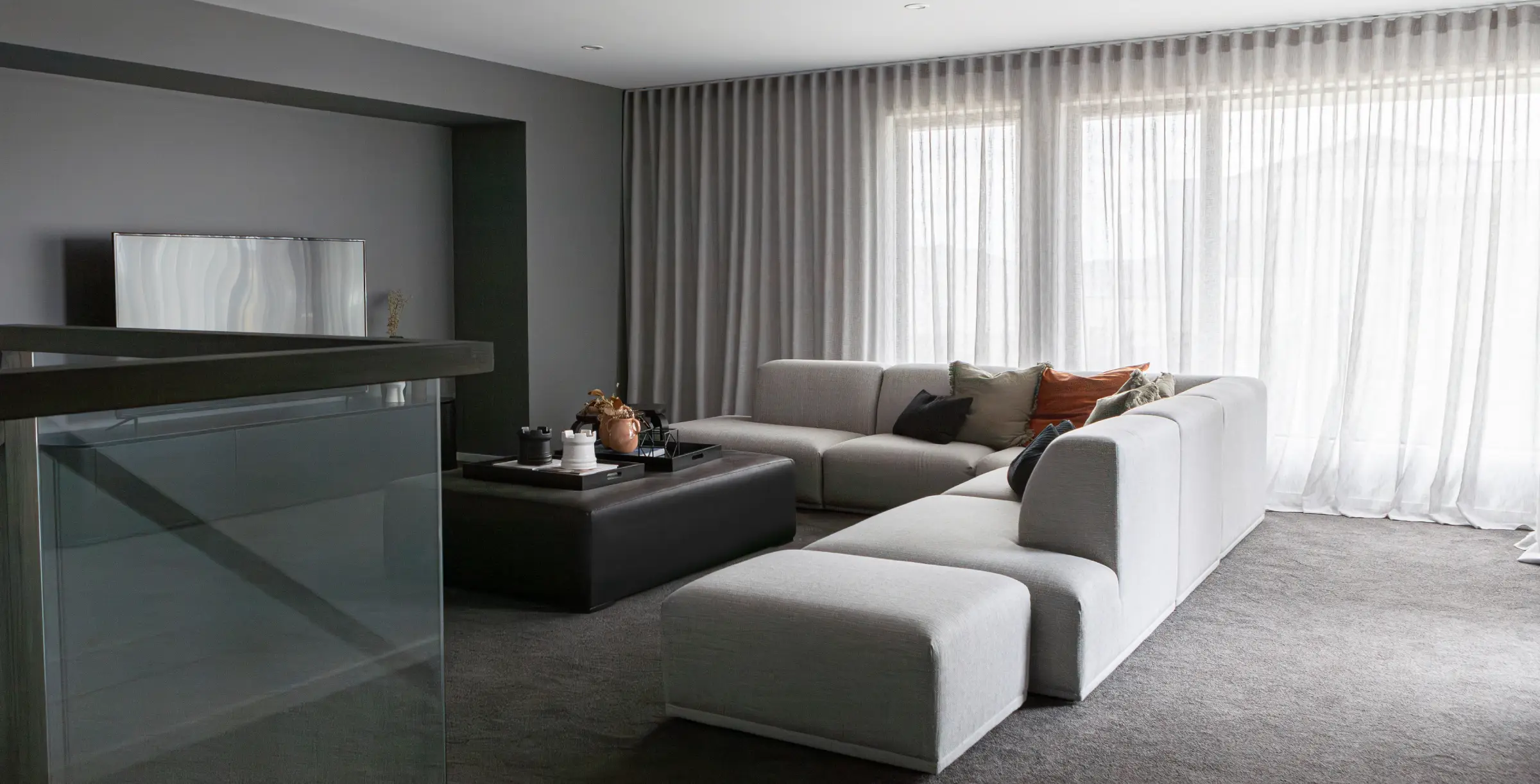
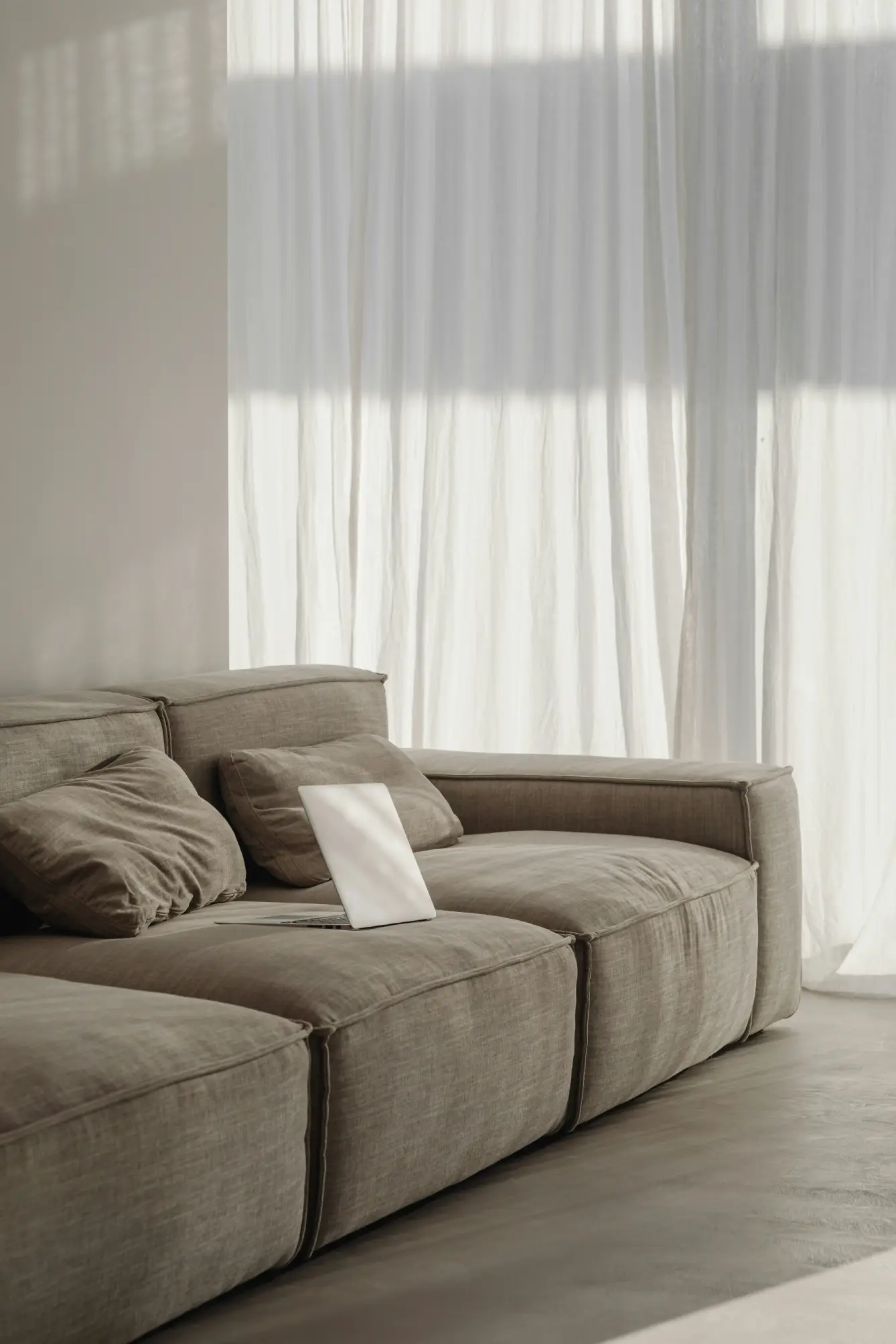
Curtain colour and pattern choices matter more by the coast than they do inland. Strong sunlight will fade some dyes faster than others, so lighter tones are a sensible default. They reflect heat, help keep rooms cooler and disguise salt splashes and dust.
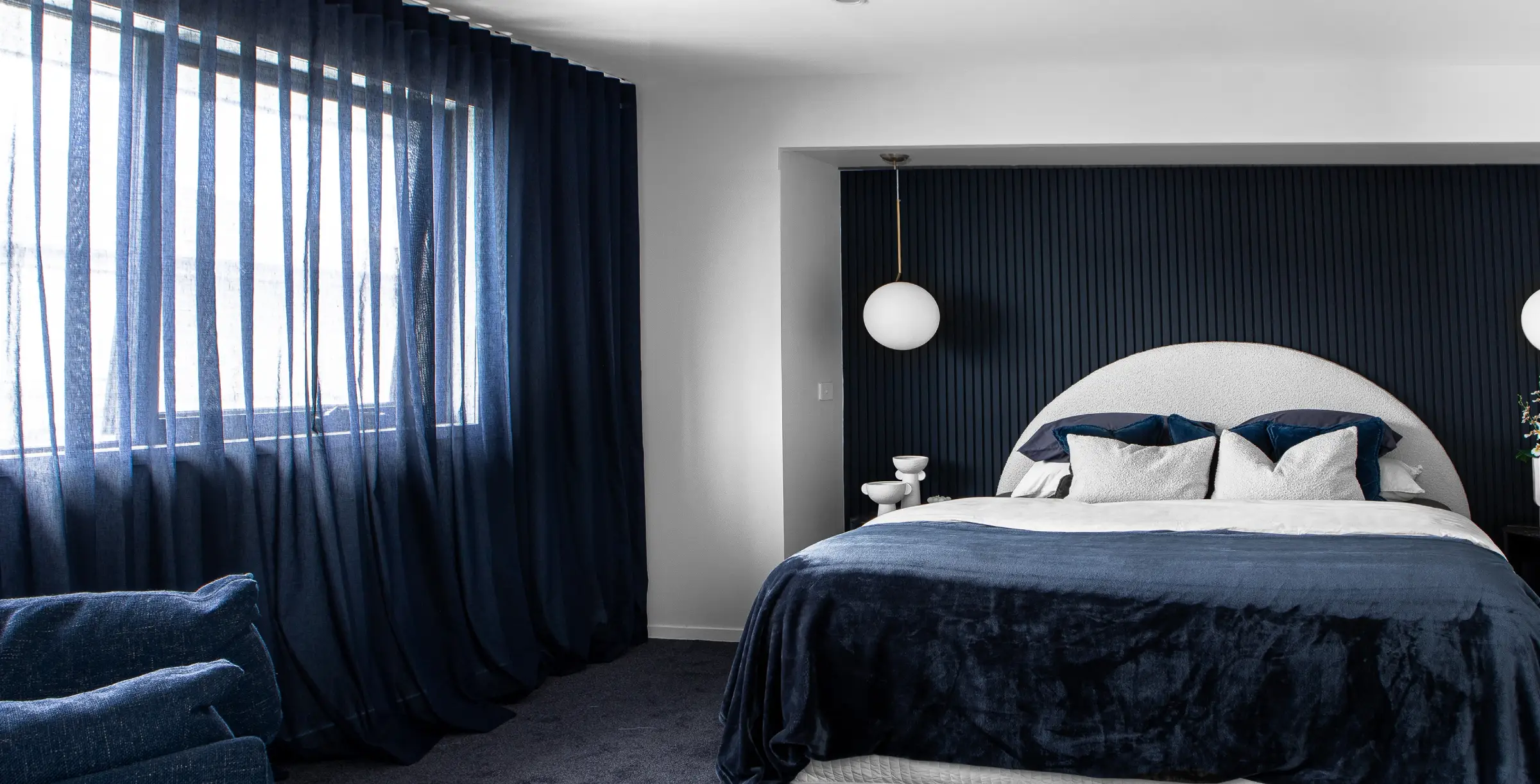
If you love deep or bright colours, look for solution-dyed fabrics because the colour permeates the fibres and resists fading far better than surface-dyed cloth. Another option is to use lined curtains, so the lining takes the sun and salt while the front stays protected.
Textured weaves and small- to medium-scale patterns hide minor marks and wear, so you do not see every speck of salt or tiny stain. For flexibility, pick a neutral base for the main window treatments and add patterned or coloured panels, pelmets or tiebacks to introduce personality without committing the whole room to a high-maintenance colour.
Installation Tips for Long-Term Performance
When you fit curtains and tracks, mount rods or tracks at least 100 to 150 mm above the window recess so the fabric and hardware avoid the worst of direct sun and salt spray. That extra height improves drape and stops curtains touching hot glass.
Make sure curtains hang clear of window sills by 20 to 30 mm so water does not collect on the hem. If your home gets heavy sea spray, increase that gap.
Use tiebacks or holdbacks to pull curtains open during the day. Letting them breathe reduces trapped moisture and speeds drying after humid nights. Where doors face the sea, allow generous clearance so curtains do not brush or trap salt on door handles and frames.
For bay and bow windows choose flexible tracks designed to curve smoothly. Rigid systems force fabric and carriers to strain, which shortens life and causes uneven wear. Pick corrosion-resistant fixings and check that end stops, gliders and carriers are rated for coastal conditions.
Finally, have a professional measure and fit made-to-measure curtains to avoid tension, poor pleat formation and premature rubbing at stress points.
Cleaning and Maintenance Routine
A simple, regular routine keeps curtains fresh and extends their life.
- Ventilate daily. Let fresh air circulate to lower indoor humidity and reduce mildew risk.
- Vacuum monthly on a low-suction setting using a soft brush attachment to remove dust and salt particles.
- Shake or brush curtains outside periodically to dislodge grit.
- Spot clean salt deposits promptly with a soft cloth dampened in freshwater. Pat gently. Do not rub, which can drive salt deeper into fibres.
- For full cleaning, follow the fabric care label. Many performance and synthetic fabrics tolerate gentle machine washing or professional laundering. If in doubt, choose professional cleaning.
- Dry curtains fully before rehanging. Damp fabric trapped in folds invites mildew.
- For motorised tracks, follow the manufacturer’s servicing schedule. Wipe exposed track surfaces with a damp cloth to remove salt deposits and dry immediately.
Preventing and Treating Mildew
Mildew loves damp, warm spots and feeds on dust and fibres. Prevent it by keeping humidity low with good ventilation, extractor fans in bathrooms and kitchens, and a dehumidifier in particularly humid rooms.
Choose mould-resistant linings and performance fabrics that dry quickly. Never store curtains in cupboards or garages that stay damp.
If you spot early mildew, take the curtains outside and give them a good shake to remove loose spores. Always test any cleaner on a hidden seam first. For light growth, mix a mild detergent with warm water, lightly sponge the affected area, rinse thoroughly with fresh water and hang the fabric to dry in bright air or sunlight. For stubborn patches, use a specialist textile mould cleaner following the product instructions carefully, then rinse and dry completely.
When mildew covers large areas, has penetrated the lining or keeps returning despite cleaning, arrange professional textile restoration or curtain cleaning to stop damage and protect your home.
Durable, Made to Measure Australian Made Certified Curtains for Homes of Distinction
Longevity and cost-effectiveness Coastal environments accelerate wear, and investing in high-quality, Australian Made Certified custom curtains saves money over time when made with the right fabric and lining. Custom manufacturing ensures proper fit, which reduces strain on fixtures and prevents gaps that let sun and salt hit the fabric directly.
MAC Window Fashions offers Australian Made Certified custom curtains from a massive range of premium fabric houses, including Warwick, Basford Brands, and James Dunlop. Our products are available through MAC retailers Australia-wide, so you can match performance needs to your budget.