
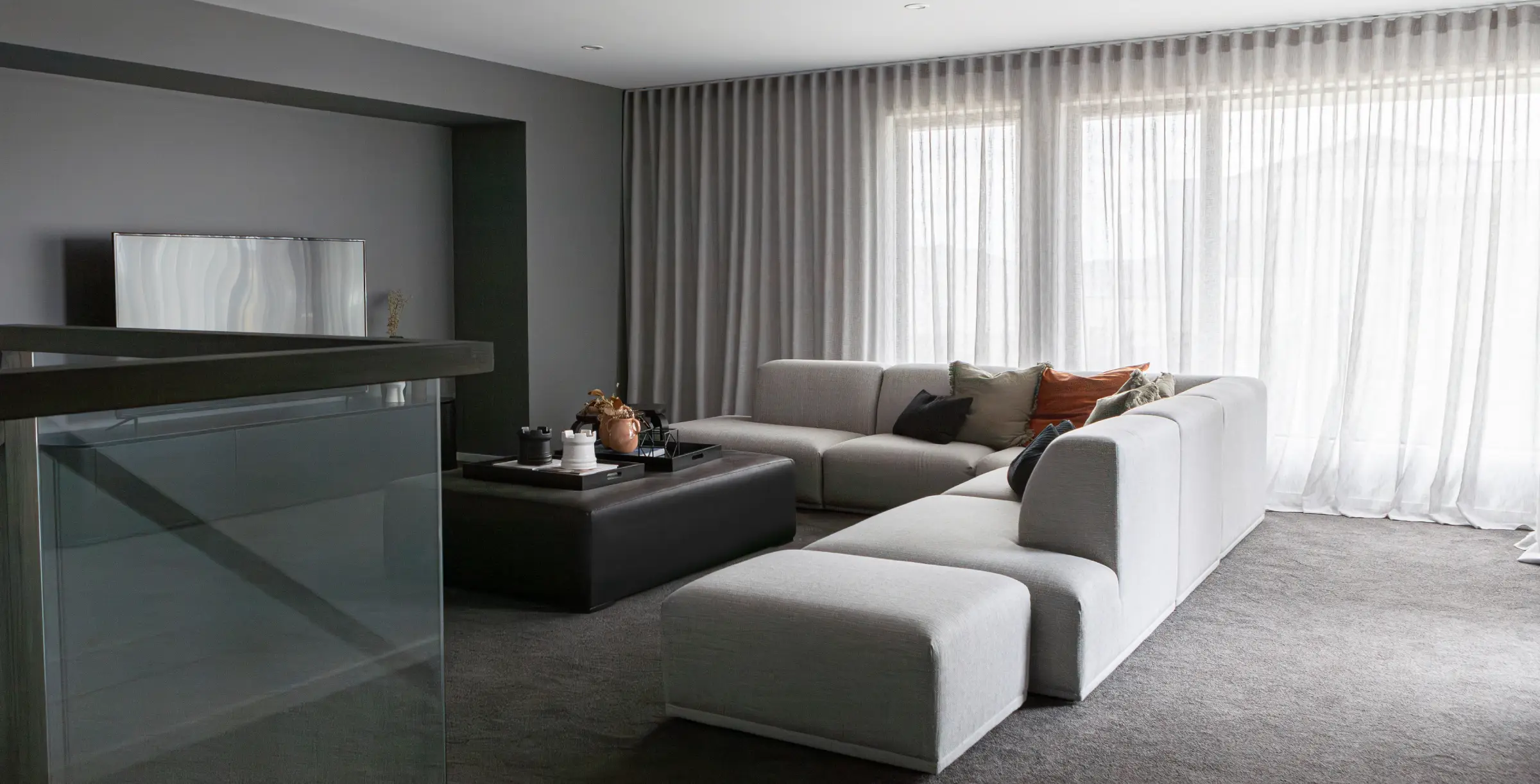
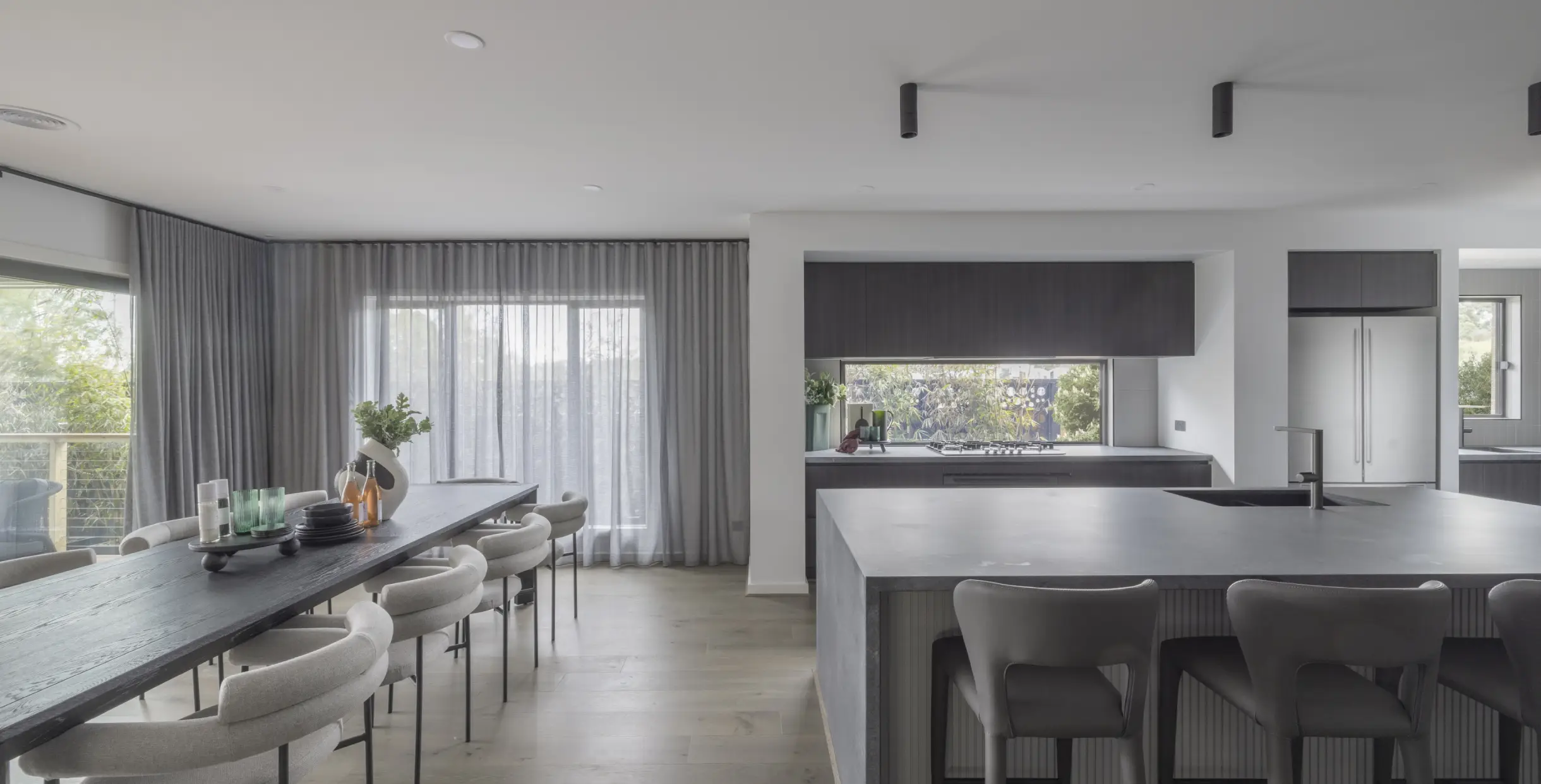
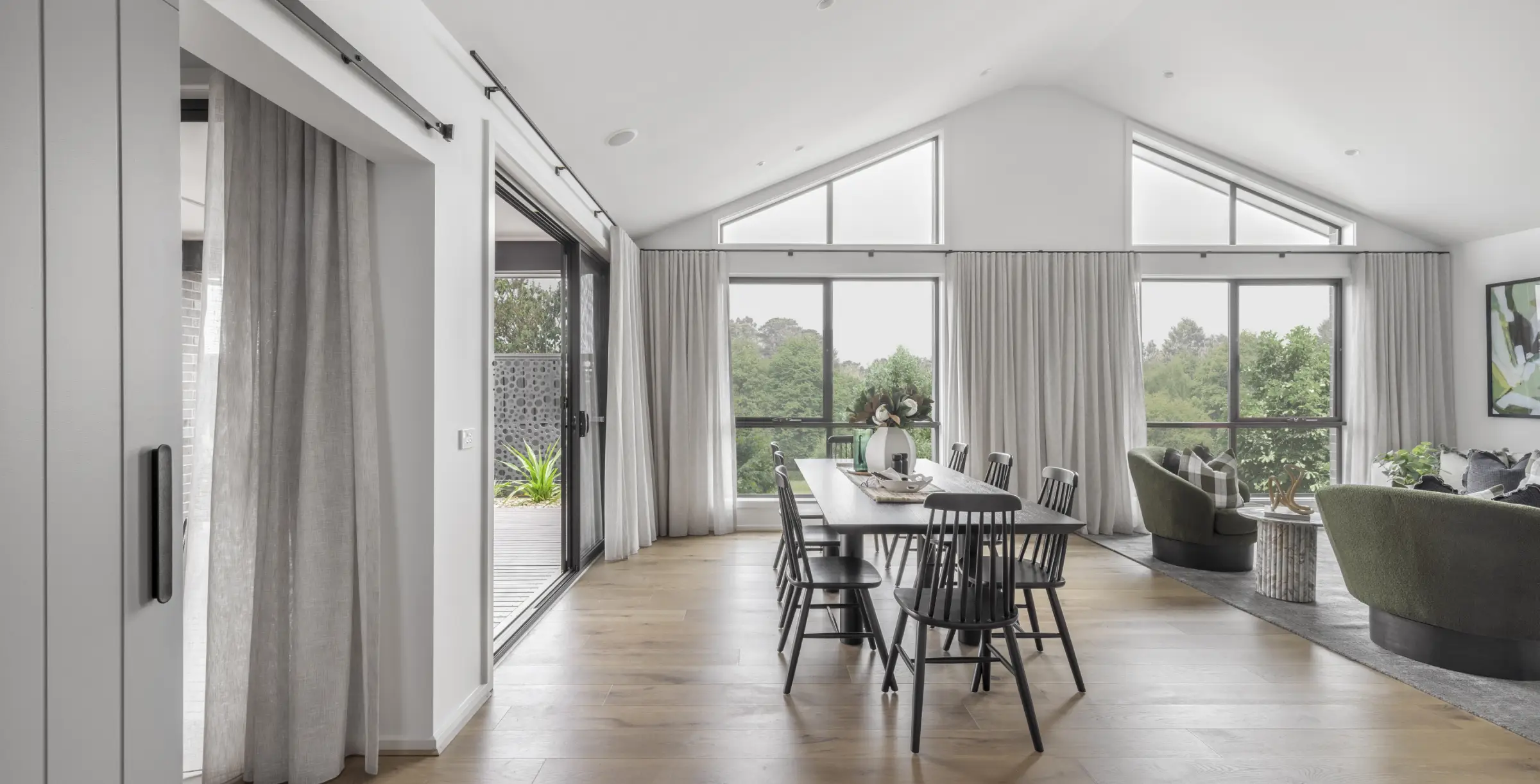



Choosing the right Somfy motor for curtains and blinds matters. It affects performance, long-term service costs and client satisfaction. This guide helps interior designers, curtain installers and specifiers choose motors that work well in residential developments and commercial settings. It blends technical detail with practical advice and points you towards local Australian resources, including Australian Made Certified custom curtains. Please note we do not supply motors. We supply motorisation compatible tracks and accessories designed to integrate with Somfy and other standard motor drives. Become a MAC retailer or work with a MAC partner to access free fabric samples and hardware samples and made-to-measure products Australia-wide.
The Project Context
Start by assessing how the space will be used. Apartments and townhouses have different needs to hotels, offices and hospitality venues. Ask these questions early:
- Who will operate the blinds or curtains and how often? Frequent use needs higher duty-cycle motors.
- What control systems are required? Simple wall switches differ from full building management integration.
- Are there safety or compliance needs? Fire-rated fabrics, emergency access or child-safe controls change the brief.
- What is the expected lifecycle and maintenance regime? Multi-site commercial clients often demand serviceable, warranty-backed solutions.
Load, Curtain Type and Track Compatibility
Calculate the curtain weight accurately. Heavy drapes, layered linings and acoustic textiles add mass. Somfy publish motors rated by torque and compatibility, so match motor torque to the measured curtain weight plus a safety margin. For long runs or multiple pockets, consider distributing loads across several motors rather than a single oversized motor to reduce wear.
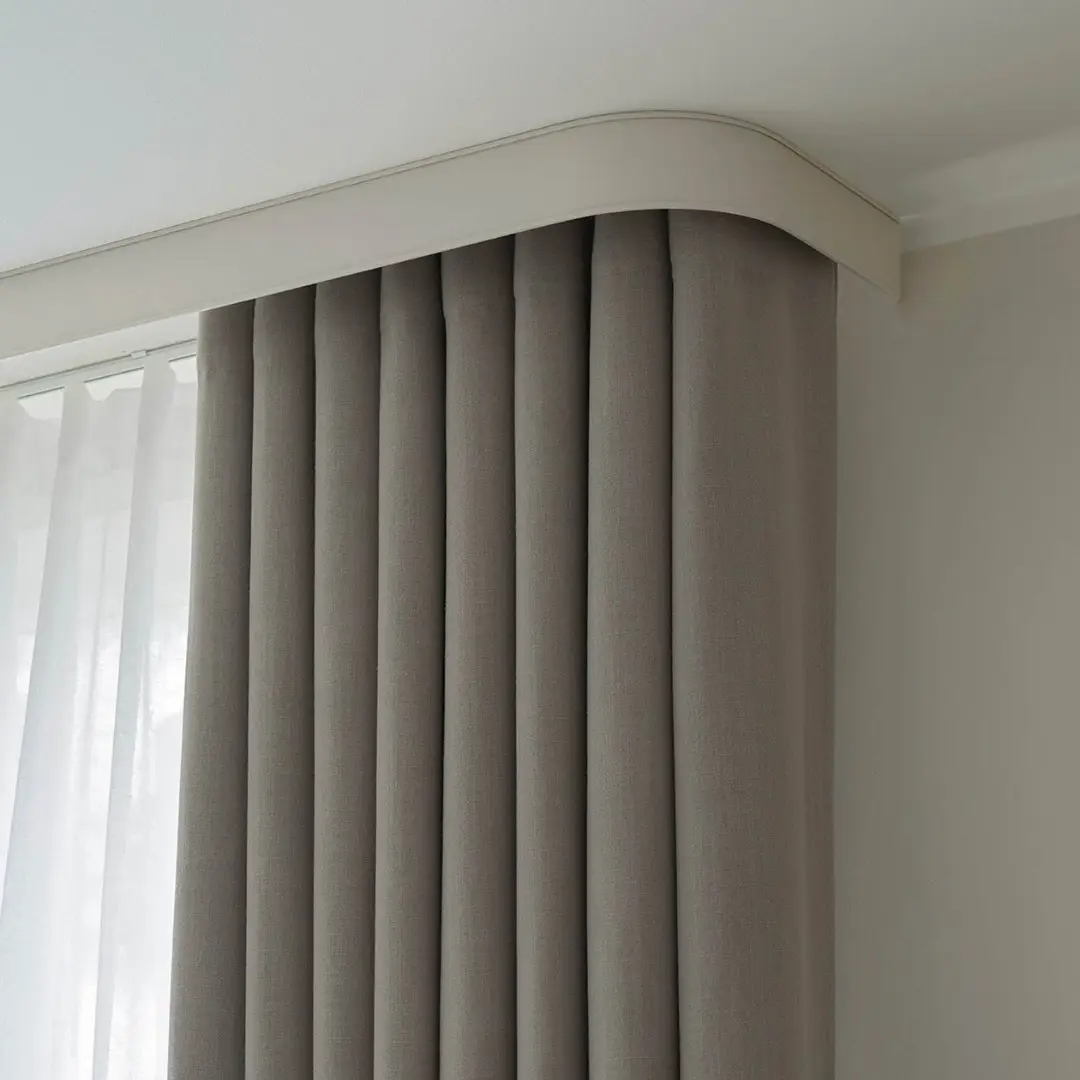
Choose tracks that match both the fabric heading and the motor interface. Our range of motorisation compatible tracks includes profiles and carriers that accept Somfy drive units or drive adaptors. Coordinate closely with the motor supplier to confirm spindle sizes, coupling types and carrier spacing. For projects using Australian Made Certified custom curtains, work with your curtain maker so tracks and motors match the fabric heading style and glide system.
Duty Cycle and Life Expectancy
Commercial environments usually demand higher duty cycles than residential. Duty cycle is the percentage of time a motor can run in a given period without overheating. For a busy hotel ballroom or a corporate boardroom with frequent daily operation, specify motors rated for continuous or high duty cycles. In residential developments select motors with moderate duty cycles unless the building is serviced apartments or short-stay accommodation.
Look at the expected operating lifetime. Somfy motors typically provide thousands of cycles, but it’s also important to confirm the warranty terms and how warranty is affected by installation practices, environmental conditions and maintenance. For multi-site contracts, negotiate extended service options or tiered warranties to protect asset managers.
Control Systems and Integration
Determine how the client wants to control window treatments. Common options include:
- Hardwired wall controls and rocker switches.
- Radio frequency remotes for independent zones.
- Somfy RTS or Somfy IO for wireless control and scene programming.
- Integration with smart home platforms, building management systems and third-party automation via protocols such as KNX or through gateway devices.
Commercial specifiers often need centralised control or scene-based automation. Somfy IO offers two-way communication and diagnostics, which help operations teams monitor motor status across multiple units. For residential developments staged for resale, simple systems can be more practical and reliable.
Ensure track selection supports the chosen motor communication and mounting needs. Our motorisation compatible tracks accept standard motor couplings and allow secure routing of control wiring and sensors.
Power and Wiring Options
Somfy motors come with a range of power options for different site constraints and safety:
- Mains-powered motors for reliable continuous use.
- Low-voltage options for simpler wiring and safety in wet or public areas.
- Battery-powered or rechargeable motors for retrofit situations where running mains cabling would be costly.
- Solar options for external or patio installations in high-sun areas.
Plan cable routes and concealment with electricians and ceiling contractors. For apartment blocks, check metering and electrical contractor access, and consider centralised power for motor banks on multi-motor installations. Our tracks include accessible channels and fixing points for tidy cable management and compliant installation.
Safety, Compliance and Accessibility
Follow the National Construction Code and any local building regulations from the outset . Discuss Australian standards and requirements with facility managers and consult a fire engineer early, especially for spaces with fire-rated curtains or integrated life-safety systems.
Key Technical Points to Check and Specify
- Clearances and sprinkler coordination: Allow the required vertical and horizontal clearances from sprinkler heads and detection devices so fire suppression performance is not impaired. Confirm distances with the project fire consultant.
- Fire performance and test evidence: Specify fabrics and linings with the appropriate fire test reports and certificates. Ask for manufacturer test data and certificate numbers for the relevant Australian standards and include these in tender documents.
- Motor behaviour on alarm: Ensure motor control systems allow interface with the fire alarm panel. Motors should support hold-open/release logic or return-to-safe positions as required by the fire strategy. Record the required control logic and confirm compatibility with the chosen motor supplier.
- Emergency operation and fail-safe features: Provide manual override or emergency release mechanisms and check that motor options include thermal protection and torque limiting to avoid fabric damage under fault conditions. Where required, specify battery backup or uninterruptible power to allow safe operation during outages.
- Accessibility and assistive controls: Include options for voice, timed automation, accessible wall controls and smart-home or BMS integration to meet disability access needs. Confirm switch heights, control labelling and program presets with the client.
- Environmental and ingress protection: For external or semi-exposed installations, select tracks and motor interfaces with suitable IP ratings and corrosion-resistant fixings. Specify sealants or flashings where needed.
- Documentation and verification: Require factory test reports, on-site commissioning records, and a signed handover certificate confirming mechanical limits, control wiring, alarm integration and emergency operation were tested. Keep spare parts and service instructions accessible for facilities teams.
Always verify whole-system compliance. Our motorisation compatible tracks are manufactured for commercial use and designed to work with compliant drives, but final certification depends on the combination of motor, track, fabric and control logic. Coordinate all parties so the installed system meets safety, accessibility and fire-safety requirements.
Noise and Motor Selection
Noise is a prime consideration for hospitality, office and residential projects. Choose motors with low mechanical and electrical noise, and pair them with quiet tracks, soft carriers and soft-close end-stops. We do not supply motors; we supply motorisation compatible tracks and motor interface kits. Below are practical technical points and example Somfy models to discuss with your motor supplier.
Technical Criteria to Specify
- Sound level: Aim for motors and systems that deliver low perceived noise. Measure in situ where possible. Use an A-weighted sound meter during operation and compare against background noise. Target perceived operating noise no higher than typical background levels for the space (for bedrooms aim for as low as possible; for boardrooms and hotel suites aim to keep motor noise below conversational levels).
- Torque (Nm): Match motor torque to the full curtain weight plus allowances for linings and acoustic interlinings. For wide or heavily layered curtains, specify higher torque or multiple motors. Note torque relates to starting load and to overcoming friction in carriers and bends.
- Linear speed and travel profile: Slower travel feels quieter and more premium. Specify adjustable speed or multi-stage profiles so installers can balance speed versus noise. Many Somfy curtain motors offer configurable speed ramps and soft-start/soft-stop.
- Duty cycle and thermal protection: Select motors with duty cycles suited to expected use. Commercial spaces often need high or continuous duty ratings. Ensure thermal cutouts and torque limiting protect the fabric and motor under fault conditions.
- Two-way diagnostics and position feedback: Somfy IO or similar two-way protocols provide diagnostics and position feedback, useful for facilities management and to detect noisy or obstructed runs early.
- Mechanical coupling and spindle interface: Confirm spindle diameter, coupling type and adapter detail with the motor supplier. Incorrect coupling increases vibration and noise. Our compatible tracks offer standard motor interface kits to aid correct alignment.
- Track and carrier friction: Low-friction carriers, correct carrier spacing and soft glide tape reduce required torque and noise. Specify high-quality carriers and soft glides for acoustic-sensitive spaces.
- Bends, pockets and joins: Each curvature and join increases friction and noise. For long runs consider intermediate support carriers or multiple motors to reduce tension and audible strain.
Example Somfy Motors to Discuss with Your Supplier
- Somfy Glydea Ultra (curtain motor): Designed for smooth, silent curtain operation with configurable speed and soft-stop profiles. Suitable for mid to heavy-weight curtains when paired with the correct gearbox.
- Somfy Glydea 60 or Glydea 35 (depending on project): Options for heavier drapes and larger spans; check torque and travel speed to match fabric weights.
- Somfy Sonesse range (Sonesse 30 / Sonesse 50): Highly regarded for quiet roller and venetian applications and sometimes used in light curtain systems or where low noise is essential.
- For high-use commercial venues request Somfy motors with higher-duty listings and integrated thermal protection or external brake options.

Why Choose Australian Made Certified Curtains and the MAC Retailer Partnership
Australian Made Certified curtains provide provenance, local support and easier compliance with Australian standards. For designers and installers, working with local manufacturers in Melbourne reduces lead times and simplifies warranty handling.
MAC Window Fashions and our retail partners offer Australian Made custom solutions and a comprehensive range of motorisation compatible tracks, as well as made-to-measure curtains and hardware products tailored to project needs. This partnership supports faster sample approvals and helps you present confident, locally backed solutions to clients. The result will be a dependable, quiet and efficient motorised solution your clients will value!