








Custom curtain packages sit at the intersection of design, engineering, and installation. When they are specified well, they operate smoothly, hold their shape over time, and integrate cleanly with the building. When they are not, issues show up quickly. Tracks bind, curtains sit unevenly, or the stack overwhelms the wall.
For interior designers and project managers, the goal is control. Control over performance, appearance, timelines, and installation outcomes. That starts with a more technical approach to working with your curtain manufacturer.
Engage Early to Resolve Buildability and Integration
Curtains and tracks rely on surrounding construction details. That means they should be resolved alongside ceilings, joinery, and electrical planning, not after.
Early engagement allows the manufacturer to review:
- Ceiling build-ups and recess opportunities
- Substrate strength for fixing loads
- Bulkhead depth relative to curtain drop
- Electrical routing for motorised systems
- Glazing configuration and access
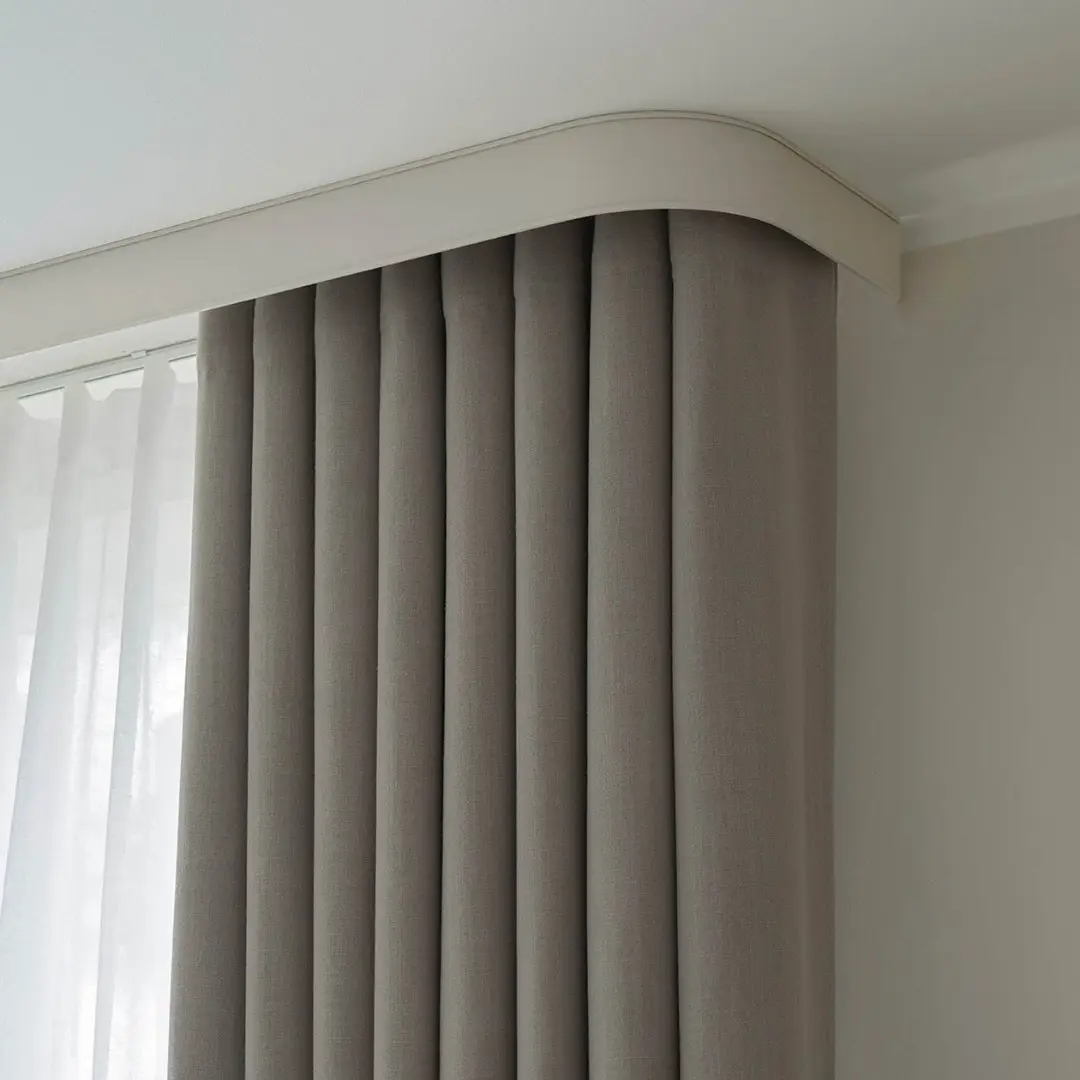
For recessed tracks, confirm:
- Minimum cavity width to accommodate track plus tolerance
- Depth required for both track profile and curtain heading clearance
- Alignment with plasterboard set-outs to avoid visible offsets
Without this input, you risk clashes that require site fixes, which rarely achieve a clean finish.

Define Measured Conditions with Installation Tolerances
Precision matters. Curtain systems operate across long spans, so small dimensional errors compound quickly.
Document:
- Finished floor level to underside of ceiling or bulkhead
- Exact window opening sizes including returns
- Position of mullions, door frames, and handles
- Distance to adjacent walls for stack-back
Allow for tolerances:
- Floor level variation across the width of the opening
- Ceiling deflection in longer spans
- Fabric drop adjustments post-installation
A 10 to 15 mm variation in floor level can affect how a curtain sits. If this is not accounted for, you will see inconsistent breaks or floating edges.
Site measures should be verified as close as possible to installation. Where risk is high, allow for adjustable drop systems or staged hemming.
Specify Fabric Based on Performance Data
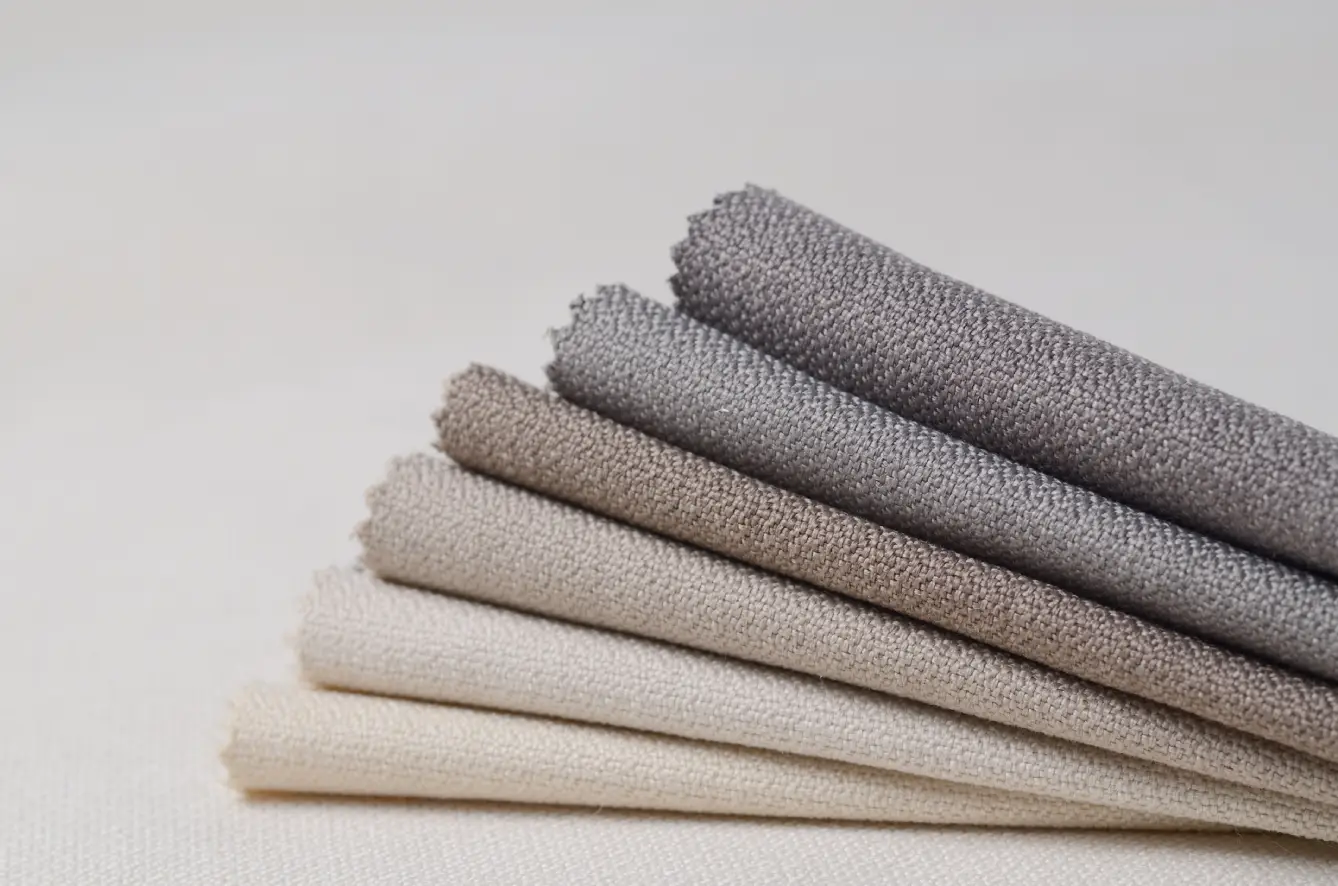
Fabric selection should be supported by measurable performance criteria, not just appearance, and free curtain fabric samples are essential here.
Assess:
- GSM (grams per square metre) to estimate weight and drape
- Light transmission values for sheers
- Blockout performance for lined systems
- Acoustic absorption coefficients where relevant
- UV stability for sun-exposed elevations
Heavier fabrics improve drape and acoustic performance but increase system load. That affects:
- Track selection
- Bracket spacing
- Motor capacity if automated
Lining choices also change behaviour:
- Standard linings improve opacity and protect face fabric
- Thermal linings reduce heat gain and loss
- Acoustic linings add mass and reduce reverberation
In commercial environments, confirm compliance requirements such as fire ratings and durability standards.
Engineer the Curtain Build: Fullness, Heading, and Weight
Curtain construction directly influences both visual outcome and mechanical performance.
Fullness ratio and fabric yield
Calculate fullness based on:
- Desired aesthetic
- Fabric stiffness
- Track type
Typical ranges:
- 2.0x for controlled, minimal stack
- 2.2 to 2.5x for a fuller, more consistent wave
Higher fullness increases:
- Total fabric weight
- Stack-back width
- Load on carriers and brackets
Heading selection
Each heading type interacts differently with the track system:
- S-fold requires consistent carrier spacing and wave tape compatibility
- Pinch pleat concentrates load at hook points
- Wave systems rely on even distribution across carriers
Mismatch between heading and track system leads to uneven movement or distorted folds.
Finished drop control
Define drop intent clearly:
- Clear of floor by 5 to 10 mm for high-traffic areas
- Touching floor for standard residential
- Controlled break of 10 to 20 mm for softer styling
Final drop should consider:
- Fabric stretch under load
- Environmental conditions such as humidity
Match Track Systems to Load and Span Requirements
Curtain track specification is not generic. It must be engineered based on load, span, and usage frequency.
Key inputs:
- Total curtain weight per metre
- Overall span length
- Number of carriers and their load rating
- Expected daily cycles of operation
For wider spans or heavier curtains:
- Increase bracket frequency to prevent deflection
- Use tracks with higher moment capacity
- Select carriers designed for smooth movement under load
Incorrect bracket spacing is a common failure point. Excessive spacing leads to track bowing, which increases friction and shortens system life.
For motorised curtain track systems:
- Match motor torque to total curtain weight
- Confirm maximum track length per motor specification
- Plan cable routing and access points for servicing
Integration with automation systems such as Somfy requires coordination with electrical and smart home specifications.

Calculate and Allow for Stack-Back Early
Stack-back affects both function and appearance. It should be calculated, not estimated.
Factors influencing stack-back:
- Fabric thickness and stiffness
- Fullness ratio
- Heading type
As a guide:
- Heavier fabrics with higher fullness create deeper stacks
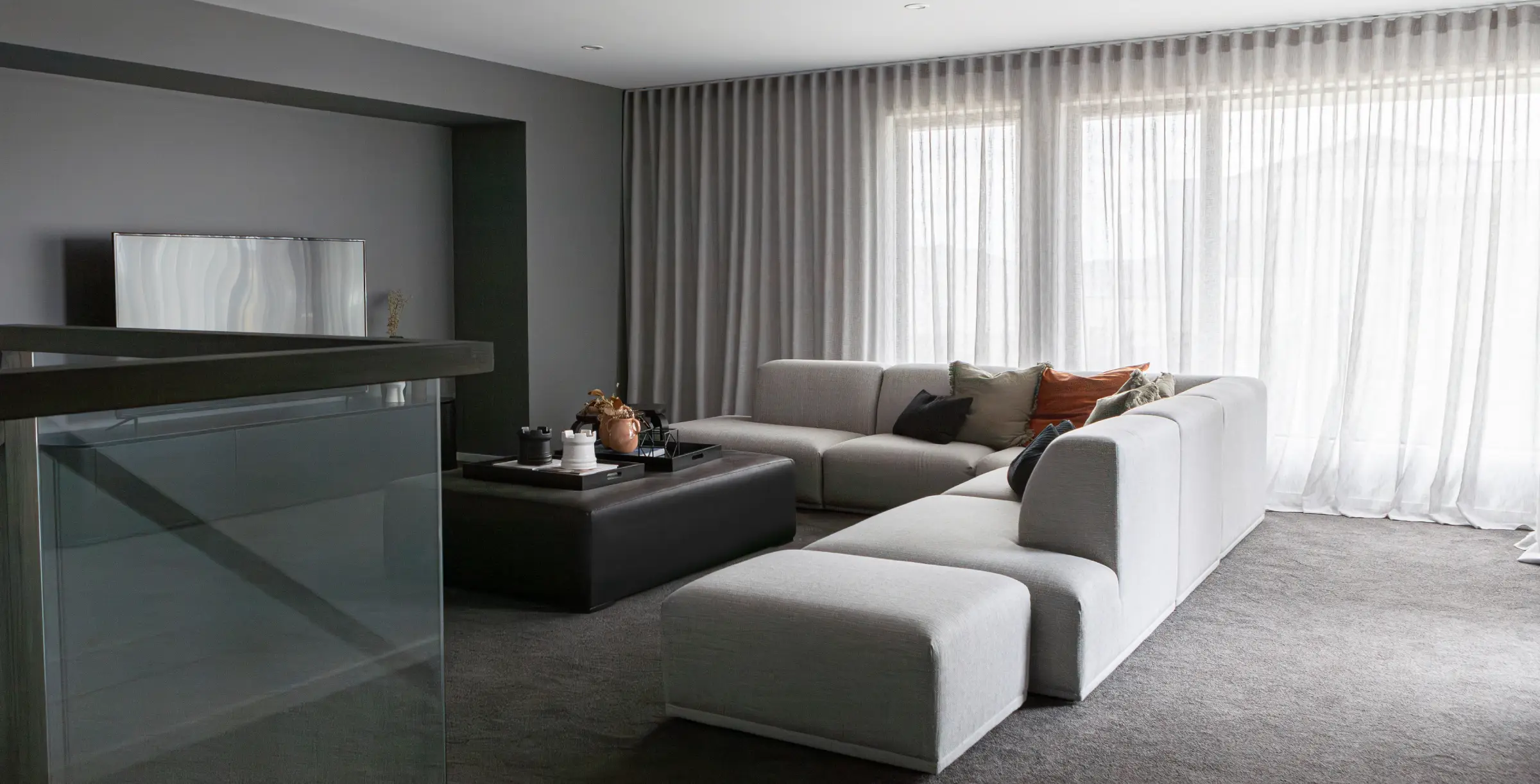
- Wave headings produce more uniform but often larger stacks
Confirm:
- Available wall space to accommodate stack
- Clearance from glazing to maintain daylight
- Impact on doors, especially sliding systems
Where space is limited, reduce fullness or divide curtains into multiple tracks to distribute the stack.
Coordinate Interfaces with Other Trades
Curtain systems interact with multiple elements on site. Lack of coordination creates delays.
Key coordination points:
- Electrical rough-in for motorisation
- Structural fixing behind plasterboard or ceilings
- Joinery integration for pelmets or concealment
- HVAC placement that may affect curtain movement
Provide clear shop drawings that include:
- Track layout and fixing points
- Electrical connection locations
- Section details for recessed systems
This reduces interpretation on site and ensures consistent execution.
Plan Production with Realistic Lead Times
Custom curtains involve multiple stages:
- Fabric procurement
- Cutting and pattern matching
- Sewing and heading application
- Quality inspection
- Packing and transport
Lead times vary depending on fabric availability and project scale.
For multi-room or staged projects:
- Sequence production to align with site readiness
- Prioritise critical areas first
- Allow contingency for delays
Rushed production increases the risk of errors, particularly with pattern alignment and finishing.
Control Installation Standards
Installation determines how the system performs in practice.
Set clear standards for:
- Track level tolerance across the span
- Bracket spacing in line with manufacturer specifications
- Carrier alignment and smooth operation
- Consistent curtain drop across all panels
For motorised systems:
- Test full open and close cycles
- Adjust limits for precise stopping points
- Confirm remote or automation control is functioning
Inspection at handover should include operational testing, not just visual review.
Standardise Specifications Across Projects
For designers and project managers working across multiple sites, consistency is key.
Develop standard specifications for:
- Preferred track systems
- Typical bracket spacing for common loads
- Approved fabric ranges
- Default fullness ratios and headings
This reduces decision fatigue and improves repeatability.
Working with a consistent manufacturing partner supports this approach. They understand your standards and can apply them across projects without starting from scratch each time.
Documentation and Specification Standards
Clear documentation removes guesswork. It ensures the manufacturer, installer, and project team are all working to the same brief. Without it, small assumptions turn into visible inconsistencies on site.
A well-prepared curtain specification should cover both performance and construction in detail.
Core specification inclusions
At a minimum, document the following:
- Track system
Profile type, finish, mounting method (ceiling or wall), and whether it is recessed or face fixed - Bracket spacing and fixing method
Maximum spacing based on load, plus substrate requirements such as timber backing or steel support - Fabric selection
Supplier, range, colourway, and GSM where available - Lining type
Standard, blockout, thermal, or acoustic lining, including colour and attachment method - Fullness ratio
Defined as a multiplier of track width to avoid variation during manufacture - Heading style
S-fold, pinch pleat, or wave, including carrier spacing requirements if applicable - Finished drop
Exact dimension from track to floor, including clearance or intended break - Stack-back allowance
Required space when curtains are fully open, confirmed against wall conditions - Operation type
Manual or motorised, including control system, power location, and integration requirements
This level of detail allows the manufacturer to price accurately and produce consistently across multiple areas or sites.

Shop drawings and approvals
Shop drawings are critical for confirming intent before production begins. These should include:
- Track layouts with dimensions
- Bracket locations and fixing points
- Section details for recessed installations
- Motor positions and power entry points
Review these carefully. Check alignment with reflected ceiling plans, joinery, and glazing layouts. Approval should only be given once all interfaces are resolved.
Managing revisions and consistency
On larger or staged projects, documentation often evolves. Without control, this leads to mismatched outcomes between spaces.
Maintain:
- Version-controlled specifications
- Clear revision notes for any changes
- Consistent naming conventions for fabrics and systems
If a fabric or track is substituted, ensure the change is reflected across all related drawings and schedules.
Consistency in documentation leads to consistency on site. It reduces back-and-forth during production and avoids costly corrections during installation.
For designers and project managers, strong specifications are one of the simplest ways to improve project outcomes. They set expectations early, reduce ambiguity, and give your manufacturer the clarity needed to deliver exactly what was intended.
Consistency, Control, and Support from a Leading Melbourne Curtain Manufacturer
Strong outcomes come from a controlled process. When you have a leading curtain and track manufacturer that understands your specifications and works closely with your team, you reduce risk and improve consistency across every project.As a MAC Window Fashions partner, you can access free fabric samples, Australian made custom curtains, and track systems engineered for performance. With local manufacturing, technical support, and reliable lead times, you can specify and deliver results that hold up over time. Contact us today.