




If you’ve ever woken up at 5am to blazing sunlight streaming through your curtains, you’ll know how frustrating inadequate light blocking can be. Quality sleep depends on darkness, and achieving true blockout in a bedroom requires more than simply choosing thick fabric. The difference between dim and pitch black comes down to understanding how light sneaks into your room and systematically addressing every potential gap.
So, here’s how create a bedroom that stays dark from sunset to your chosen wake-up time.
Why Complete Blockout Matters
Research consistently shows that exposure to light during sleep disrupts your circadian rhythm and reduces melatonin production. Even small amounts of light can affect sleep quality, particularly for shift workers, young children, or anyone sensitive to early morning sun.
Australian homes face particular challenges. Our intense sunlight and long summer days mean bedrooms can be flooded with light as early as 5am. Western-facing rooms cop harsh afternoon glare that heats up spaces and makes afternoon naps impossible. Creating genuine blockout conditions gives you control over your sleep environment regardless of the season or your work schedule.
Understanding Where Light Enters Your Room
Before selecting your blockout curtains, identify every light source. The obvious culprit is the window itself, but light also creeps in around curtain edges, through gaps between the track and ceiling, and underneath poorly fitted curtains that don’t reach the floor.
Walk into your bedroom during peak sunlight or shine a torch from outside at night with existing window coverings in place. You’ll quickly spot the problem areas. Light bleeding around the sides of curtains creates the most common issue. Gaps at the top where tracks mount away from the ceiling come next. Short curtains that hover above the floor or windowsill allow significant light penetration from below.
Selecting the Right Curtain Track System
Your curtain track creates the foundation for blocking out light. Standard decorative rods mounted on brackets sit 10-15cm away from the wall, creating a gap that lets light flood around the curtain edges. This single design flaw undermines even the best blockout fabric.
Ceiling-mounted custom tracks solve this problem. Installing tracks directly onto the ceiling brings curtains closer to the wall and eliminates the top gap entirely. You can extend the track 15-20cm beyond each side of the window frame, allowing curtains to wrap around and block side light leakage.
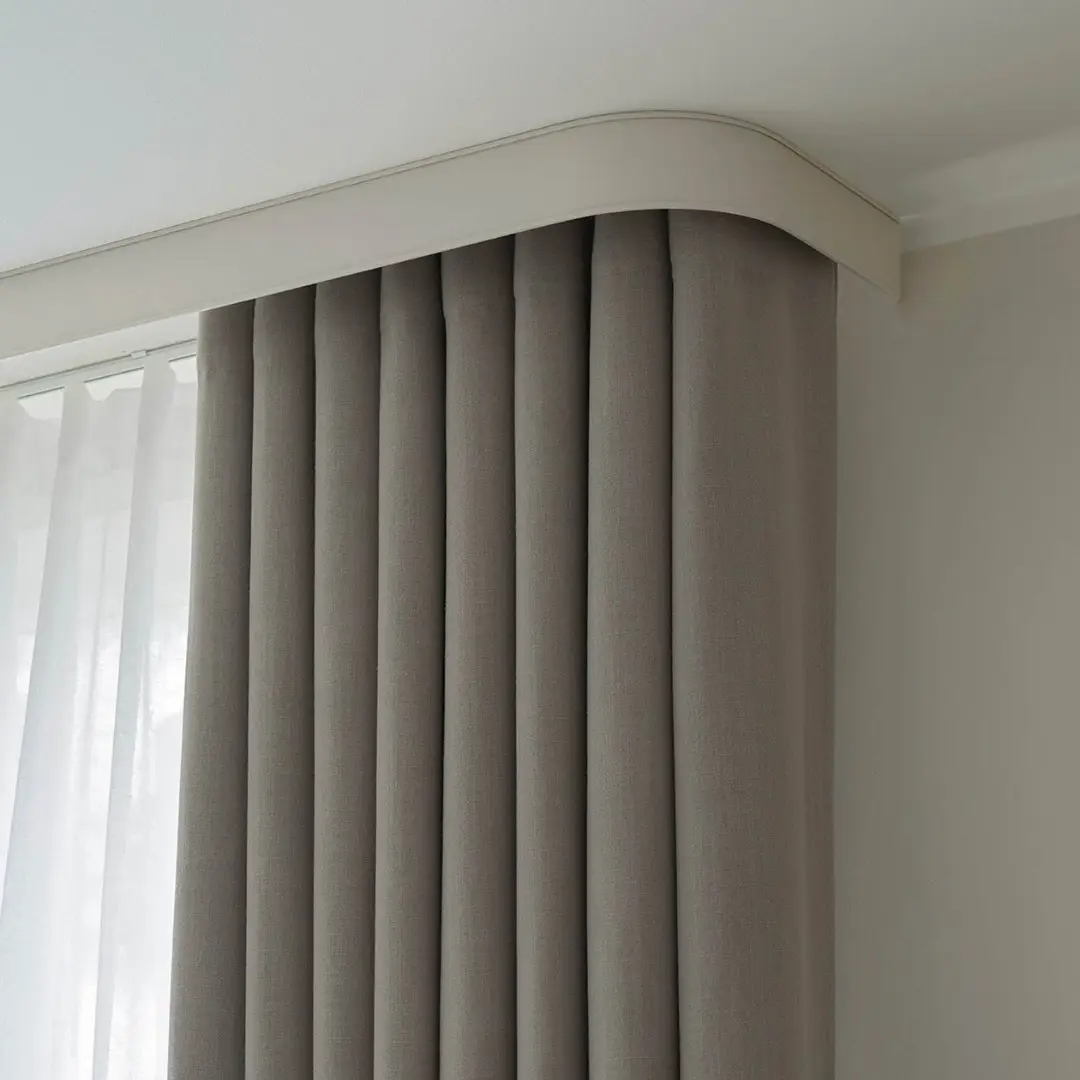
For the most effective blockout, consider recessed tracks. These sit inside a pelmet or bulkhead that gets built flush against the ceiling. The curtain hangs inside this recess, completely hidden from view when closed. No light can escape from above because there’s no gap between track and ceiling.
Curved return tracks offer another excellent solution. These tracks bend 90 degrees at each end, directing the curtain back towards the wall. When you close the curtains, the returns press against the wall surface and block side gaps. You achieve this without building pelmets or making structural changes.
The track itself needs smooth operation. Cheap plastic tracks bind and stick, which means you’ll leave curtains partially open rather than battle with them twice daily. Invest in quality aluminium tracks with ball-bearing gliders. They’ll operate smoothly for decades and support heavier blockout fabrics without sagging.
Choosing Blockout Fabrics
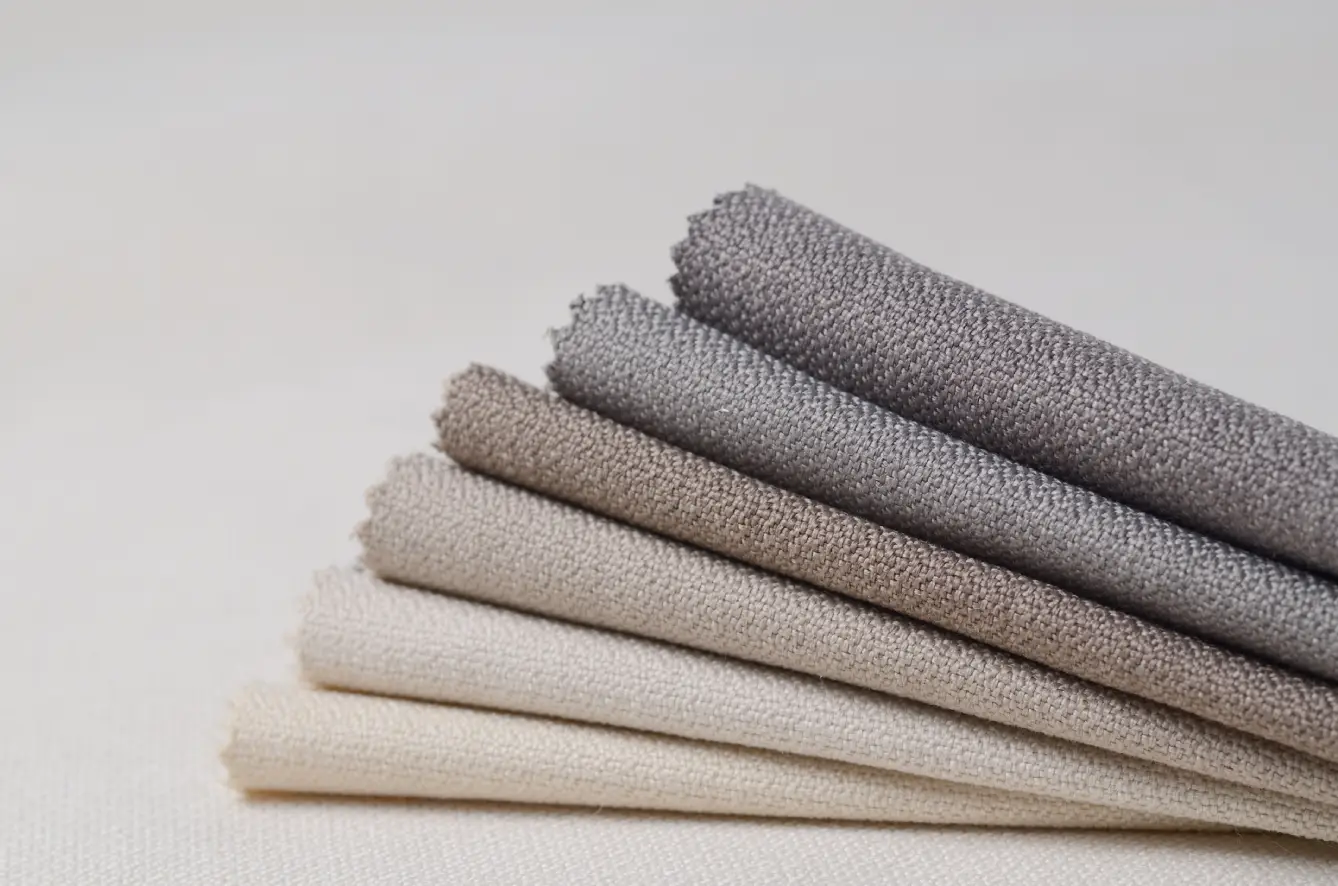
Fabric selection is another key issue. Regular fabrics from most retailers, even in dark colours, allow light to filter through the weave. Hold any fabric sample up to a window. If you can see light coming through, it won’t create blockout conditions.
True blockout fabrics have special construction. Most feature a tight weave that blocks light, combined with backing treatments that provide additional light blocking. The fabric density determines performance. Heavier fabrics generally block more light, though modern manufacturing techniques can create lighter weight materials that still deliver complete blockout.
Polyester blockout fabrics dominate the market because they hold their shape well, resist fading from UV exposure, and cost less than natural alternatives. They work effectively and require minimal maintenance. However, they can feel synthetic and lack the luxurious drape of natural fibres.
Cotton and linen blockout fabrics appeal to homeowners who prefer natural materials. Manufacturers achieve blockout properties by using extremely tight weaves or applying backing treatments. These fabrics drape beautifully and feel more substantial. They do cost more and may require professional cleaning to maintain their appearance.
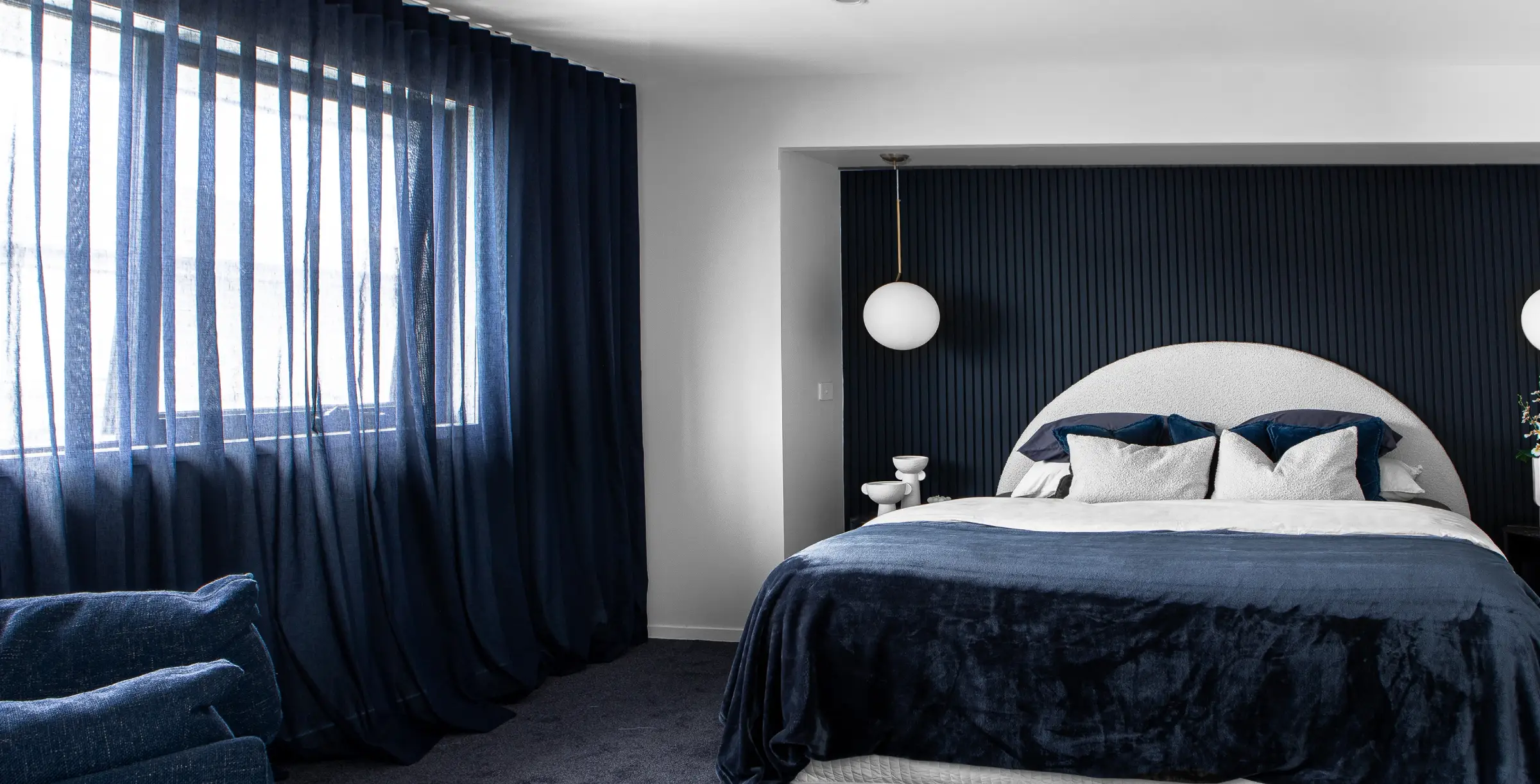
Colour matters less than you might expect. While darker fabrics absorb more light, a properly constructed pale blockout fabric will still prevent light transmission. This means you can choose colours that complement your bedroom design rather than defaulting to dark, heavy-looking curtains.
The Different Backing Options
The backing on your curtain fabric determines how much light penetrates through to your bedroom. Several backing options exist, each with different performance levels and characteristics.
Acrylic foam backing creates one of the most effective barriers against light. Manufacturers apply a thick layer of acrylic foam to the reverse of decorator fabric, creating a sandwich that blocks virtually all light transmission. This backing also provides excellent insulation properties, helping to keep bedrooms cooler in summer and warmer in winter. The foam adds body to the curtain, creating beautiful folds and a substantial feel. The main drawback is weight. Foam-backed curtains require sturdy tracks and proper installation to support the additional mass.
Rubber or PVC coatings offer another common backing choice. A thin layer of light-blocking material gets applied to the fabric reverse. These backings work well and cost less than foam alternatives. They do have limitations. The coating can deteriorate over time, particularly with sun exposure or if you wash curtains rather than dry clean them. Some people find the faint rubber smell off-putting, though this usually dissipates after a few weeks.
Triple-weave fabrics provide blockout properties without additional backing. Manufacturers weave three layers together, with a black layer sandwiched between two decorative layers. This construction blocks light while maintaining a softer drape than backed fabrics. The curtains feel less stiff and move more naturally. They also tend to be lighter, making them easier to operate and less demanding on track systems.
Bonded blockout fabrics combine a face fabric with a separate blockout layer that gets thermally bonded together. This technique allows you to choose virtually any decorator fabric for the room-facing side while maintaining complete light blocking. You get design flexibility without compromising on darkness.
Detachable blockout linings present a flexible option. You can add or remove them seasonally, using blockout in summer when early light is problematic and removing them in winter for a lighter feel. The lining hangs separately behind your main curtain, attached with hooks or sewn-in ties. This system works well but does create a small gap between layers where light can penetrate if not installed carefully.
Installation Techniques for Zero Light Leakage
Perfect fabric and tracks mean nothing if installation leaves gaps. Professional installers know that attention to detail during fitting makes the difference between good and perfect blockout.
Extend your track at least 15cm beyond the window frame on each side. This overlap ensures curtains cover the entire window opening plus the surrounding wall. When curtains close, they meet in the middle and wrap around the sides, blocking light that would otherwise creep around the edges.
Mount tracks as close to the ceiling as possible. Even 5cm makes a difference in light leakage. If you’re installing tracks on a ceiling with cornices, you may need to add packing pieces to bring the track forward. This prevents curtains from catching on the cornice while maintaining the close-to-ceiling position.
Ensure curtains reach the floor or windowsill. Measure carefully before ordering. Curtains that puddle slightly on the floor (adding an extra 2-5cm) create a better light seal than curtains that hover above it. If your bedroom has carpet, the curtain will compress the pile slightly and block the bottom gap completely.
Consider adding side channels or returns. Plastic or metal side channels attach to the wall on each side of the window. The curtain edge slides into this channel, creating a seal that prevents any light from escaping around the sides. This commercial-grade solution works brilliantly for complete blockout but does look more utilitarian than residential installations typically allow.
Velcro strips provide another effective sealing method. Attach one side of the Velcro to the wall around your window frame and the corresponding side to the curtain edge. When you press the curtain against the wall, it creates a seal. You can still open curtains normally during the day. This solution works particularly well for nurseries or bedrooms where absolute darkness is critical.
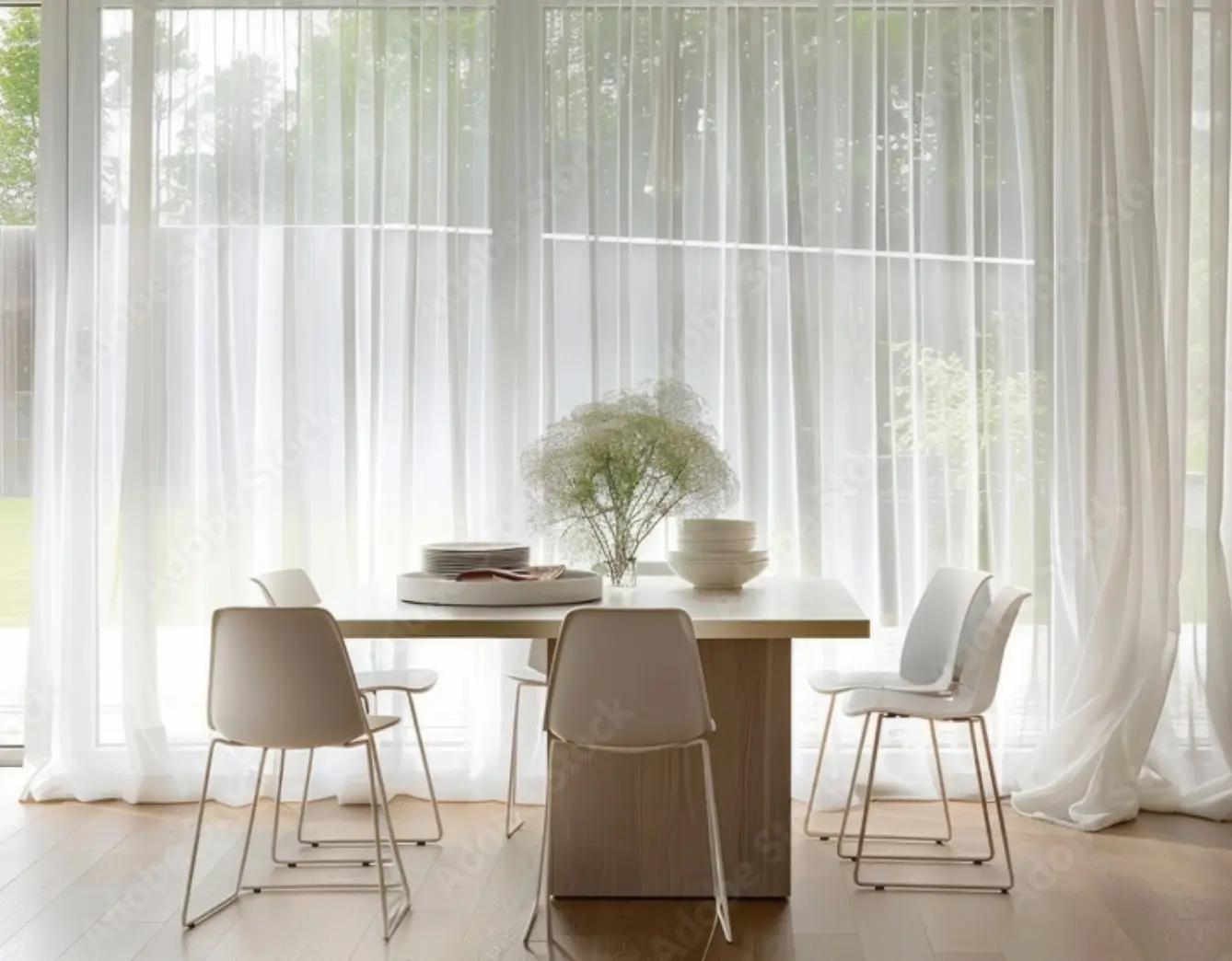
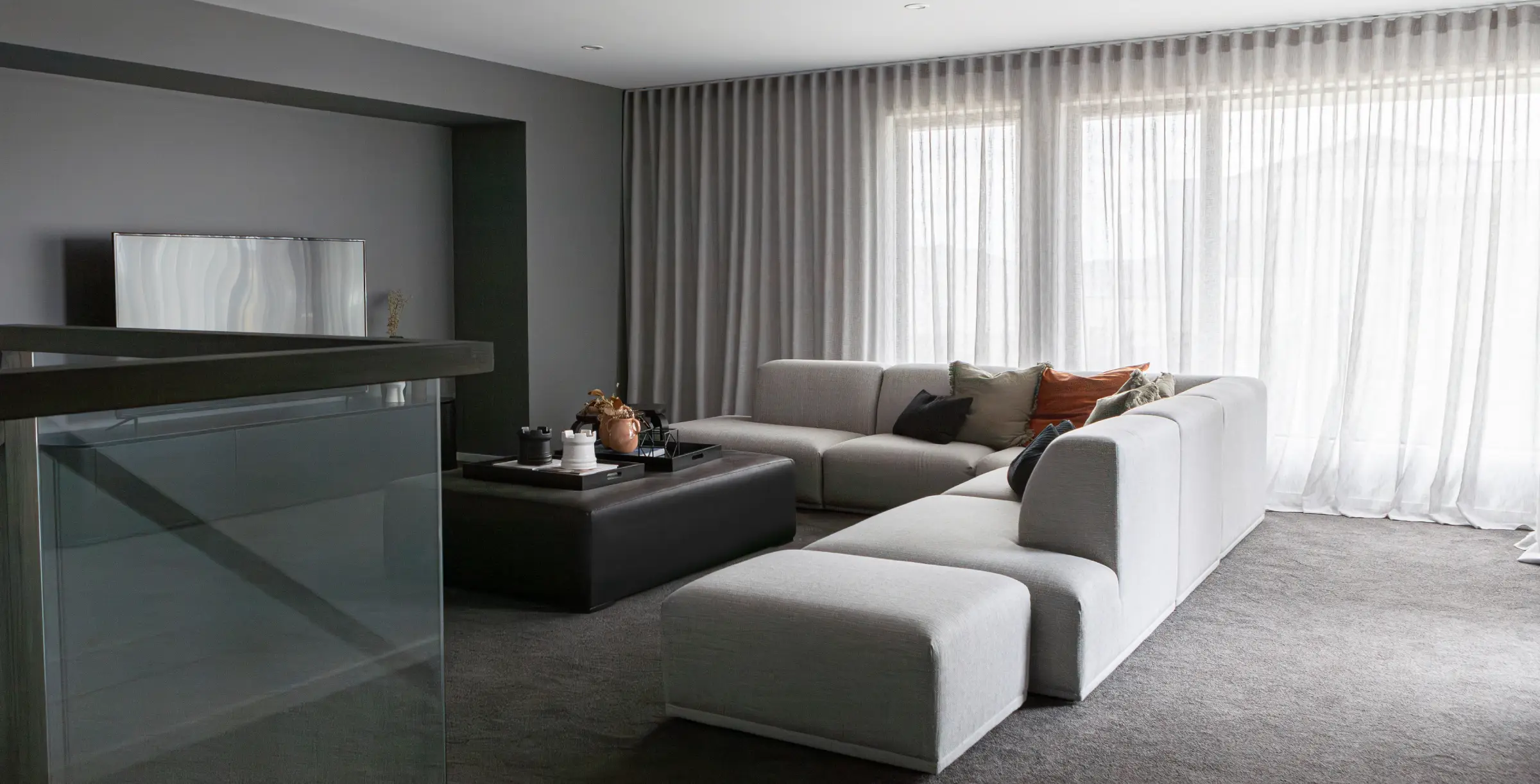
Double tracks allow you to layer sheer curtains with blockout curtains. The sheer layer provides daytime privacy while allowing natural light. The blockout layer pulls across for sleep time. This arrangement gives you flexibility throughout the day while maintaining the option for complete darkness when needed.
How Automation Helps
Motorised curtain systems have moved from luxury to practical necessity for many homeowners. Opening and closing heavy blockout curtains twice daily becomes tiresome. Automation solves this problem while adding convenience and energy efficiency.
Basic motorised systems use a remote control to open and close curtains. You press a button and the motor quietly draws curtains across the track. This simplicity works well and costs significantly less than smart home integration.
Smart home automation takes control further. Program curtains to close automatically at sunset or a specific time each evening. They can open gradually in the morning, simulating natural sunrise even in a blockout room. This gentle wake-up method feels more natural than alarm clocks and helps regulate your circadian rhythm.
Somfy integration with home automation platforms like Google Home, Amazon Alexa, or Apple HomeKit allows voice control. This lets you tell your curtains to open or close without leaving bed or set scenes that combine curtain positions with lighting and temperature control. You can also add a seasonal mode, like a summer mode to close curtains during the hottest part of the day to reduce cooling costs, then open them in the evening to capture cool breezes.
Battery-operated motors offer another wire-free option. Rechargeable batteries last 6-12 months between charges, depending on usage. You simply remove the battery pack and charge it like a mobile phone. This solution works brilliantly for bedrooms where running power cables would require cutting into walls.
Maintaining Your Blockout System
Blockout curtains need regular maintenance to continue performing effectively. Dust and dirt accumulate on fabric surfaces, particularly on the folds and heading tape. Vacuum curtains monthly using an upholstery attachment on low suction. This removes surface dust before it becomes embedded in the fabric weave.
Professional cleaning every 12-18 months keeps curtains looking fresh and maintains their light-blocking properties. Backings can deteriorate if washed incorrectly, so always follow manufacturer care instructions. Many blockout fabrics require dry cleaning rather than washing to preserve their structure and backing integrity.
Check tracks and gliders every few months. Dust and debris can accumulate in track channels, causing binding and uneven movement. Wipe tracks clean with a damp cloth and vacuum out any debris. Spray silicone lubricant on metal tracks helps maintain smooth operation without attracting dirt.
Inspect curtain hems and side seams periodically. Even small tears or separated seams can allow light penetration that undermines your blockout setup. Address repairs quickly before they worsen. A small stitch now prevents major repairs later.
Custom Curtains for the Perfect Sleep Environment
MAC Window Fashions manufactures custom blockout curtains and curtain track systems in Melbourne and ships Australia-wide, offering local manufacturing and an extensive fabric range from James Dunop, Basford Brands, Zepel, Hoad and more, combining your personal style with complete light blocking performance.
Our curtains meet Australian Made Certified standards, ensuring quality construction and local manufacturing support. We supply through a network of professional installers across Australia who provide expert measuring services, fabric selection guidance, and professional installation. These partners understand the technical requirements for achieving genuine blockout conditions and can recommend the best track systems and fabrics for your specific bedroom needs.
Contact a MAC partner near you to discuss creating your perfect sleep environment with custom-made blockout curtains. You can also get free fabric samples here.
FAQS
Will custom blockout curtains work with existing curtain rods?
Standard decorative rods mount 10-15cm from walls, creating gaps that let light penetrate around edges. While they reduce light somewhat, genuine blockout requires ceiling-mounted or recessed tracks positioned closer to walls. These eliminate top light leakage entirely. MAC partners assess your current setup and recommend track upgrades that deliver effective blockout without major structural modifications to your home.
Do blockout curtains need to be dark colours?
Not at all. Modern blockout fabrics come in light neutrals, soft pastels, and subtle patterns while maintaining complete light-blocking performance through engineered backing systems. Wave fold or S-Fold heading styles create clean, contemporary lines that enhance bedroom design. MAC offers extensive fabric ranges for our blockout curtains combining visual appeal with functional performance. Our partners demonstrate how current blockout curtain designs complement rather than dominate bedroom aesthetics beautifully.
How do I clean blockout curtains without damaging the backing?
Professional dry cleaning preserves backing integrity and light-blocking properties. Machine washing can crack foam or rubber backings, causing deterioration. Monthly vacuuming with low suction using an upholstery attachment maintains cleanliness. Professional dry cleaning every 12-18 months preserves both appearance and performance. MAC curtains include specific care instructions tailored to your fabric and backing type. Our partners explain maintenance requirements during installation to protect your investment long-term.
Can blockout curtains help reduce energy costs?
Yes. Foam-backed blockout curtains create insulation barriers reducing heat transfer through windows by up to 25%. This keeps bedrooms cooler in summer and warmer in winter, with energy savings accumulating significantly over years. These savings partially offset your initial investment through reduced heating and cooling costs. MAC manufactures curtains with thermal properties engineered for Australian climates. Speak with our local partners about fabric options that optimise energy efficiency for your home.
Can I automate blockout curtains in my existing home?
Yes. Battery-operated motors require no electrical installation and run 6-12 months between charges. Somfy motorisation systems offer industry-leading reliability with seamless smart home integration through Google Home, Alexa, and Apple HomeKit. However, quality motorisation-compatible curtain tracks are essential for reliable performance. Your local MAC partner will install proper tracks and Somfy systems, ensuring years of dependable automation in your existing home.