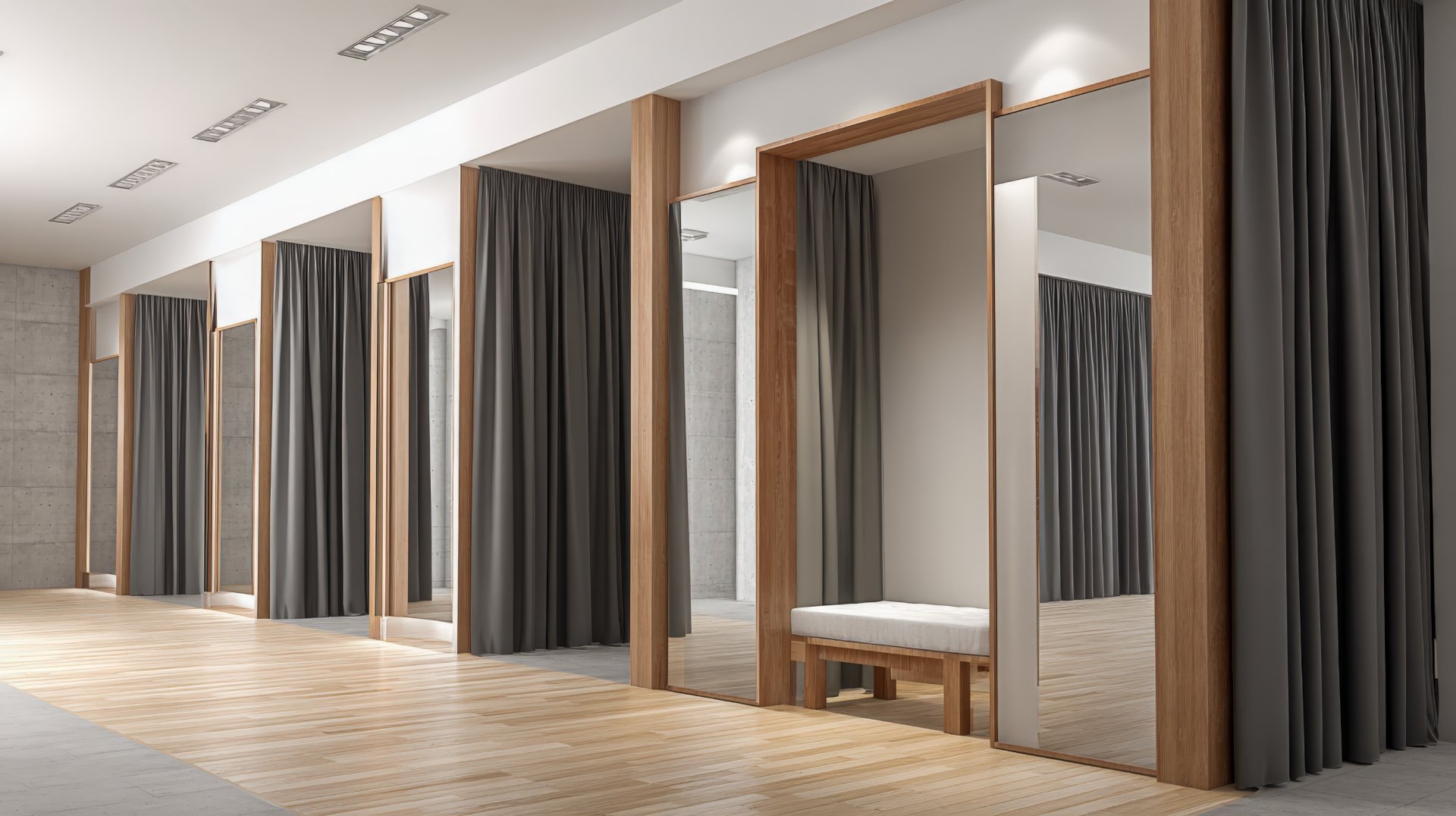

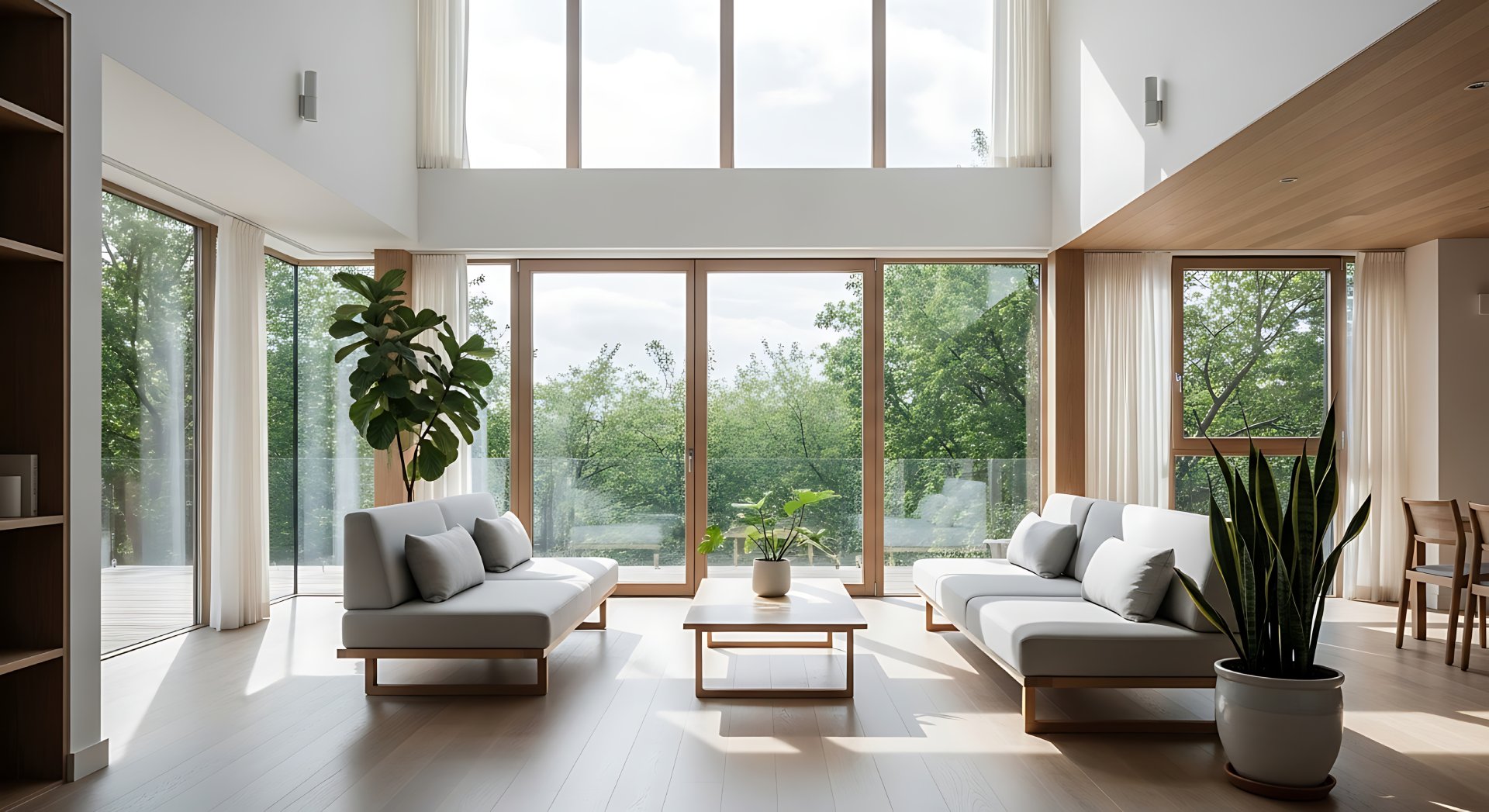
Ceiling height shapes the way a room feels, performs and ages. It affects light, acoustics, proportion and thermal behaviour. It also determines how curtains should be specified, manufactured and installed. Yet in many projects, curtain design still follows habit rather than analysis.
For installers, interior designers, architects and specifiers, ceiling height is not a background detail. It drives track selection, stack-back calculations, fabric weight, heading type, access strategy and motorisation planning. When you treat height as a primary design variable rather than a measurement to fill in later, you prevent costly revisions and deliver a better result.
Understanding the Proportions of the Room
Ceiling height sets the vertical scale of a space. A 2400 mm ceiling produces a very different visual outcome from a 3000 mm ceiling. Move into double height or atrium spaces and the design challenges increase again.
Proportion matters. Research in environmental psychology has shown that ceiling height influences how people perceive openness and comfort. Studies show that higher ceilings promote a sense of freedom and spatial openness, while lower ceilings encourage focus and enclosure. Curtains contribute strongly to that perception because they frame the vertical edges of the room.
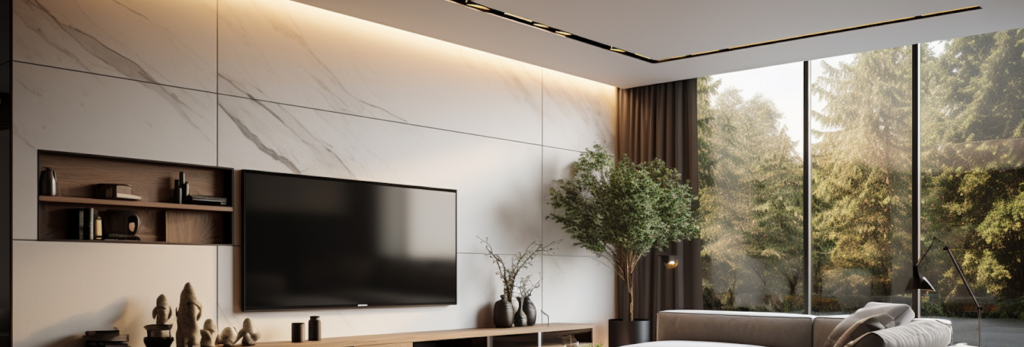
In low ceilings, curtains that terminate below the window head visually compress the space. In higher ceilings, short drops feel mean and incomplete. The safest default in most scenarios is to run curtains as close to the ceiling line as possible, but that approach must be supported by the correct track and structural preparation.
Professionals should assess:
- Finished ceiling height
- Window head position relative to ceiling
- Bulkheads or pelmets
- Cornices and services
- Structural fixing points
These factors guide both aesthetics and engineering decisions.
Low Ceilings: Precision and Restraint
Ceilings around 2400 mm demand careful detailing. There is little margin for visual error.
Track Placement
Mount curtain track systems as high as possible, ideally ceiling fixed rather than wall fixed. Even a 100 mm gap between track and ceiling can visually lower the room. Recessed tracks create a clean line and eliminate shadow gaps, but they require coordination at framing stage.
Fabric Weight and Fullness
Heavy fabrics with excessive fullness can overpower a compact space. Select fabrics with controlled drape and moderate weight. Sheers often work well in these settings because they soften light without adding visual bulk.
Avoid exaggerated stack-backs. In a narrow wall return, bulky stacks encroach into usable width and disrupt proportion.
Heading Types
Slim headings such as S-fold or wave provide a tailored look without crowding the top of the room. Deep pinch pleats can feel dense in low ceilings unless the scale of the room supports them.
Low ceilings reward discipline. Every millimetre matters. Measure accurately, confirm structural capacity, and keep visual lines clean.
Standard to Mid-High Ceilings: Opportunity for Impact
Ceilings between 2700 mm and 3000 mm offer more flexibility. These spaces can accommodate bolder gestures and layered treatments.
Extending the Vertical Line
Run curtains full height from ceiling to floor, even if the window itself is shorter. This elongates the room and emphasises architectural height.
Consider double tracks to combine sheer and blockout layers. In bedrooms and hotel suites, this improves light control and acoustic performance. The added depth of dual systems must be factored into recess width or bracket projection.
Fabric Selection
Heavier drapes with interlining perform well at this height. They provide insulation and acoustic absorption, particularly in open-plan living spaces with hard finishes.
According to guidance from the Australian Building Codes Board, fabric treatments contribute to managing glare and solar heat gain when correctly specified. While curtains are not a primary thermal control device, lined drapery can reduce heat loss through glazing in winter and limit radiant heat in summer.
Stack-Back Calculations
As drop increases, so does the stack. Calculate stack-back using realistic fullness ratios and fabric thickness. Failure to do so results in partially obstructed glazing and compromised views.
For example, a 4 metre wide opening with 2.5 times fullness in a heavy velvet can produce a significant stack depth. Ensure there is sufficient wall return or ceiling recess to house the stack fully.
Double Height and Atrium Spaces: Engineering First, Aesthetics Second
When ceilings exceed 4 metres, curtain design becomes an engineering exercise.
Structural Support
Ceiling fixings must handle increased load. The weight of tall, lined curtains multiplies quickly. Tracks require secure anchoring into structural members rather than plasterboard.
Engage structural engineers where necessary. Confirm deflection limits. A sagging track undermines both performance and credibility.
Motorisation
Manual operation at height is impractical and unsafe. Motorised curtain track systems with remote control or building integration are the norm in these environments. Plan power supply early. Retrofitting electrical feeds after plastering introduces cost and delay.
Systems compatible with home automation platforms such as Somfy provide scheduling, scene setting and integration with lighting and HVAC. In commercial projects, coordinate with building management systems.
Access and Maintenance
High-level curtains require safe maintenance strategies. Specify systems that allow removal and reinstallation without scaffolding where possible. Consider track designs that permit fabric detachment from below using extension poles.
Double height spaces magnify mistakes. Model the curtain in elevation drawings. Confirm stack positions and drop lengths before manufacture.
Ceiling Design Features That Complicate Curtains
Ceiling height does not exist in isolation. Architectural features change the equation.
Bulkheads and Recesses
Recessed tracks create a seamless look, particularly in contemporary residential and hospitality settings. However, the recess depth must account for:
- Track profile
- Brackets
- Fabric fullness
- Dual systems if required
- Clearance for smooth wave formation
Inadequate recess depth leads to fabric rubbing against plaster edges, damaging both.
Sloped and Raked Ceilings
Raked ceilings introduce geometry challenges. Straight tracks against a slope can create awkward gaps. Custom curved or angled tracks may be required. Measure accurately and confirm angles before fabrication.
Services and Lighting
Air conditioning grilles, sprinklers and downlights often compete for ceiling space. Early coordination prevents clashes. Curtains should not obstruct fire systems or restrict airflow.
Acoustic Performance and Ceiling Height
Higher ceilings often mean more reverberation. In commercial spaces such as restaurants, boardrooms and function venues, sound control is critical.
Curtains provide measurable acoustic absorption when specified with dense fabrics and interlining. While they do not replace dedicated acoustic panels, they contribute to reducing echo and improving speech clarity.
In tall spaces with hard floors and glazing, specify heavier fabrics and increased coverage width. Close curtains during peak occupancy to improve comfort. In some projects, designers use curtain walls as flexible acoustic partitions.
Energy Performance and Solar Control
Glazing height influences solar exposure, and floor to ceiling windows introduce large areas of radiant heat gain and loss, making energy efficiency an important consideration.
Lined curtains with pelmets reduce convective air movement around the top of the curtain. According to CSIRO research on residential energy efficiency, well-fitted drapery can reduce winter heat loss through single glazing by up to 40% compared to uncovered windows.
In high ceilings with full height glazing, the volume of air behind the curtain increases. Ensure that hems are weighted correctly and that curtains sit close to the wall to limit air circulation.
In commercial buildings, combine curtains with external shading and high-performance glazing for best results.
Fire Compliance in Commercial Projects
Ceiling height affects curtain drop, and larger drops increase fabric quantity. In hospitality, healthcare and aged care settings, fire performance becomes critical.
Specify fabrics that meet relevant Australian Standards for fire resistance. Confirm certification and retain documentation for compliance audits.
Higher ceilings mean more fabric mass. Ensure that selected tracks and fixings meet load requirements under emergency conditions.
Installation Planning and Tolerances
Tall drops amplify installation error. A 10 mm discrepancy at track level becomes obvious across a 5 metre drop.
Use laser levels. Confirm finished floor levels. Account for floor coverings and skirting heights. In commercial builds, verify slab tolerances and ceiling setouts before manufacturing curtains.
Where ceiling height varies along a long run, consider stepped tracks or custom solutions rather than forcing a single straight line.

Designing for Real Use
Height influences how people interact with curtains. In family homes, users expect smooth manual operation. In hotels, guests want simple controls. In corporate settings, staff require reliable, low maintenance systems.
Choose systems that suit the context. For moderate heights, quality manual tracks with smooth carriers may suffice. For taller installations, motorisation prevents strain on fabric and hardware.
Do not specify heavy fabrics in tall spaces without confirming that the operating system can handle the load over time.
Early Collaboration Delivers Better Results
Ceiling height decisions occur early in architectural design. Curtain professionals who engage at concept stage influence better outcomes.
Review reflected ceiling plans. Request window schedules. Confirm structural backing for tracks. Provide stack-back dimensions to architects so they can allocate sufficient wall return.
When installers and designers collaborate from the outset, curtains enhance architecture rather than competing with it.
Ceiling Height as a Primary Design Parameter
Ceiling height dictates proportion, structural load, acoustic behaviour, energy performance and user interaction. It changes track selection, fabric choice, motorisation planning and installation method.
Projects that ignore height often require remedial work. Projects that respect it achieve clean lines, smooth operation and long-term durability.
For curtain installers, interior designers and specifiers, the discipline is clear. Measure accurately. Model the curtain in elevation. Calculate stack-backs and loads. Coordinate with structural and electrical teams. Select fabrics and systems that match both scale and use.Working with MAC Window Fashions means partnering with a local manufacturer who understands detail, scale, and performance. Become a MAC partner and access our online design and ordering portal, streamlined support, and delivery Australia-wide. We supply a wide range of high quality curtain track systems as well as Australian Made Certified custom curtains, crafted for quality, consistency, and long term results on every project.