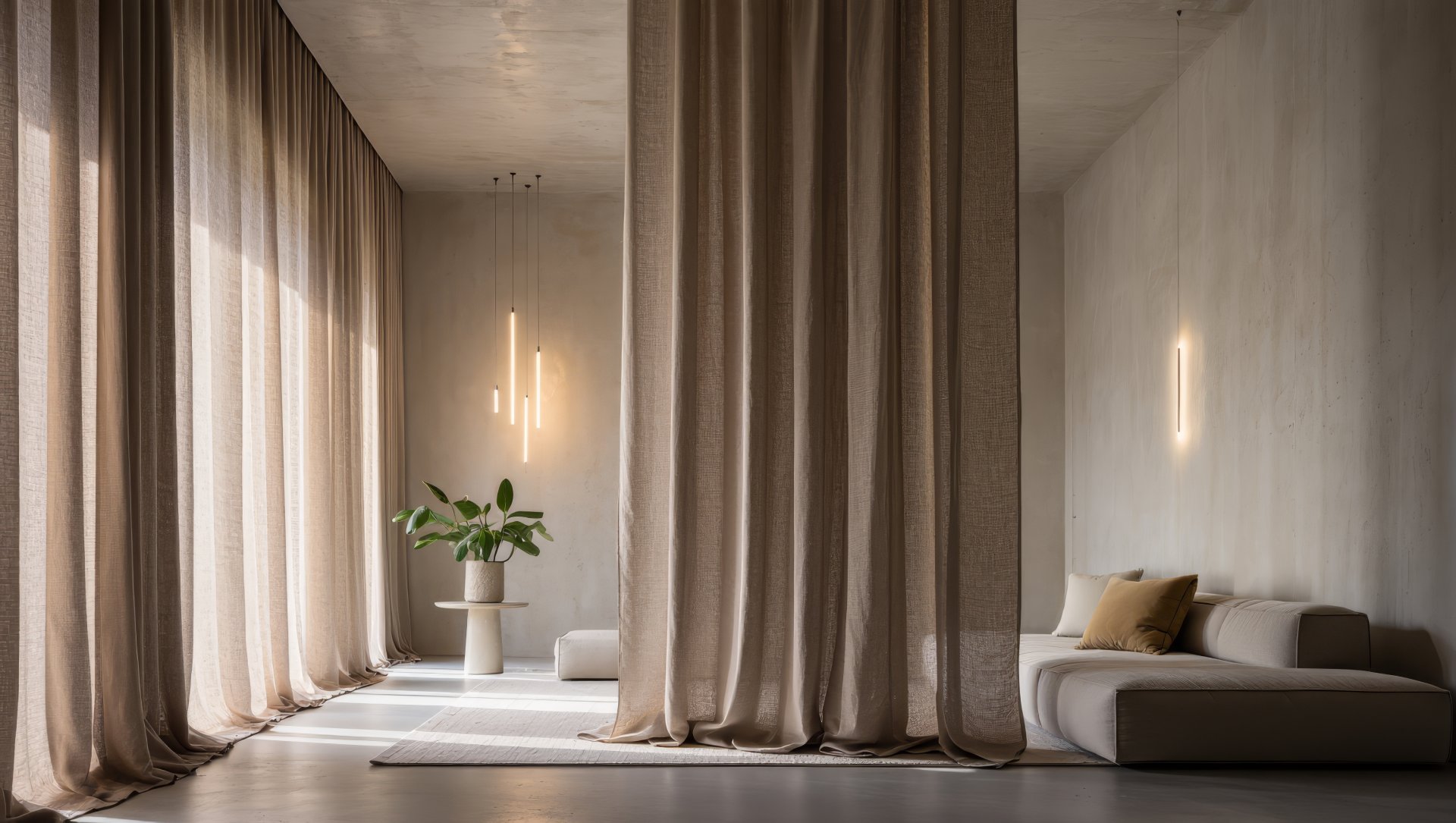


Noise is one of the most common sources of discomfort in shared environments, from open-plan offices to busy hotels and corporate boardrooms. Effective sound management is essential to achieving both functionality and atmosphere, influencing how people communicate, focus, and relax. Custom-made acoustic curtains provide an elegant solution, blending craftsmanship, design, and acoustic performance to create spaces that look as good as they sound.
Made-to-measure curtains are particularly effective, as they can be tailored precisely to the dimensions, materials, and purpose of each space. When integrated thoughtfully, they help reduce echo, absorb reflections, and enhance privacy, improving comfort without compromising on style. In offices, well-designed acoustic curtains support concentration and speech clarity. In hotels, they promote a sense of calm. In boardrooms, they protect confidentiality. By combining luxurious materials with acoustic science, custom curtains offer a refined way to transform interiors into quieter, more balanced, and more professional environments.
Why Sound Matters in Commercial Interiors
Before choosing acoustic solutions, it helps to understand why sound control is so critical in commercial spaces.
- In open-plan offices or shared work zones, background noise and conversations reduce concentration, increase fatigue, and slow down productivity. Studies have shown that poor acoustics can cause productivity losses of up to 30% or more.
- Speech privacy is important in boardrooms and hotel meeting rooms, where confidential discussions need to remain private. Well-designed curtains can act as a barrier to intelligible speech.
- In hotels, guests expect rest and quiet. Noise from corridors, neighbouring rooms, or building services disrupts comfort and may lead to complaints. Research shows that reducing reverberation and sound transmission between rooms improves guest satisfaction, and rooms with improved sound insulation and balanced acoustic conditions received significantly better ratings for comfort and quality of stay.
- Sound quality affects brand perception. Quiet, balanced environments feel more refined and professional.
Given these factors, architects, interior designers, and facility managers should plan for acoustics early in the design process rather than treating them as an afterthought.
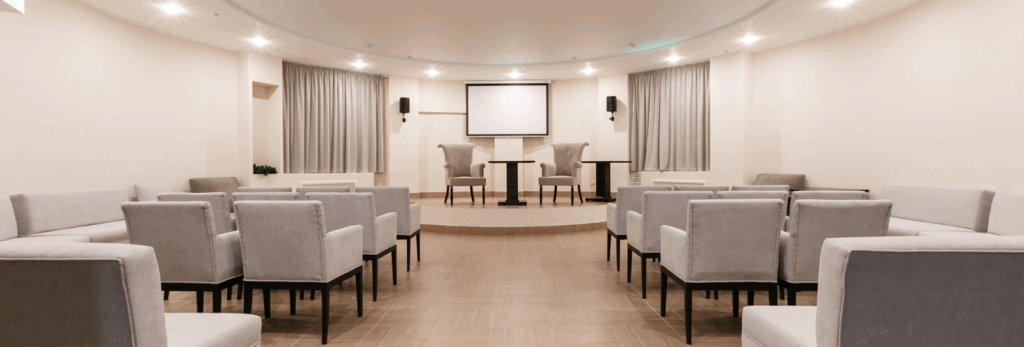
How Curtains Improve Acoustics
Curtains are not designed to make a room completely soundproof, but they do play an important role in managing sound within a space. Below are the key ways curtains influence acoustics and the practical limits of what they can achieve.
Acoustic Functions
- Absorption of mid and high frequencies
Heavy fabrics absorb higher frequencies such as the human voice. This converts sound energy into heat and reduces reflections and reverberation. - Transmission loss or barrier effect
Multi-layered or dense fabrics can help block sound from passing through. Some high-performance acoustic curtains can reduce sound transmission by 11 to 22 decibels in speech frequencies. - Damping of structural vibration
Curtains mounted on isolated tracks can reduce vibration transfer through window frames or other structures. - Reverberation control
Curtains reduce echo in rooms with hard surfaces such as glass and concrete. This helps speech remain clear and reduces background noise. - Speech privacy
By reducing speech strength and reflections, curtains support speech privacy when used alongside other materials such as acoustic panels or carpeted floors
What Curtains Cannot Do
- Curtains are not effective for low-frequency sounds such as traffic rumble or HVAC noise.
- They cannot replace solid partitions for full sound isolation.
- Their performance depends heavily on installation quality. Small gaps, poor sealing, or weak track systems can reduce results significantly.
Curtains work best when integrated with other acoustic solutions such as wall panels, ceiling baffles, and soft furnishings.
How Effective Are Noise-Reducing Curtains?
- Studies on hospital privacy curtains show measurable reductions in speech transmission, demonstrating that well-designed fabrics can meaningfully improve privacy.
- Laboratory tests confirm that multi-layer acoustic curtains can achieve insertion losses above 10 decibels for mid- to high-frequency sound.
- Research in office environments shows that improved absorption and partitioning can lift acoustic quality classifications from “Class D” (poor) to “Class B” or “Class C” (acceptable) under ISO 3382-3 standards.
- Studies show that controlling sound in office spaces improves productivity, privacy, and comfort.
These findings reinforce that curtains are not a replacement for structural solutions but an effective, flexible tool for refining the acoustic environment.
Design Considerations for Acoustic Curtains
To achieve the best acoustic results, curtain design should consider fabric choice, layering, track hardware, mounting geometry, and integration with the wider acoustic plan.
Fabric and Layering
- Choose fabrics with high surface mass. Heavier fabrics provide greater resistance to sound transmission.
- Use multi-layer construction. Combining layers or adding linings improves overall absorption and sound reduction.
- Add acoustic or blackout liners. These improve both sound and thermal performance.
- Consider fabric porosity and fibre structure. Open weaves absorb sound better, while dense or coated fabrics act as barriers.
Track, Hardware, and Mounting
- Ceiling-mounted tracks with wall returns create better sound seals around windows or glass walls.
- Silent or low-noise tracks prevent mechanical noise when curtains open or close, which is important in boardrooms and hotels.
- Isolated mounting reduces vibration transfer from the track into the building structure.
- Strong and durable tracks are essential for heavy acoustic curtains.
- Fire safety and compliance are mandatory. In Australia, curtain fabrics and tracks must meet AS/NZS standards, including AS/NZS 1530.3 for fire resistance.
Room Geometry and Coverage
- Extend curtains beyond the window edges both vertically and horizontally to prevent sound leakage.
- Curtains should reach close to the ceiling and floor.
- Fullness (for example, two or two-and-a-half times the window width) increases the surface area for sound absorption.
- Curtains perform best when combined with other sound-absorbing elements in the space.
Custom Noise-Reducing Curtains Applications
Different environments have unique acoustic challenges, from open offices filled with conversation to hotel rooms that demand peace and privacy. Understanding how to tailor curtain design for each setting ensures both acoustic performance and visual cohesion across every project.
Offices and Workspaces
Modern offices require a balance between openness and acoustic privacy. Curtains help by:
- Creating flexible quiet zones that can be closed off for focus or meetings.
- Working alongside acoustic partitions and ceiling panels for combined absorption.
- Reducing reflections in high-ceilinged spaces.
- Enhancing the acoustic comfort of meeting pods or collaboration areas.
Recent research highlights that speech privacy is a stronger driver of occupant satisfaction than overall noise levels, suggesting that well-placed curtains can make a measurable difference to employee experience.
Boardrooms and Conference Rooms
Boardrooms require clear speech and refined aesthetics. Acoustic curtains help by:
- Reducing reflections from glass walls or hard finishes.
- Acting as adjustable barriers that improve sound quality during presentations or private discussions.
- Allowing flexible control through motorised systems.
- Supporting visual appeal through fabric selection and tailored design.
Proper detailing at edges and overlaps is critical to avoid sound leakage and maintain professional acoustic quality.
Hotels and Hospitality
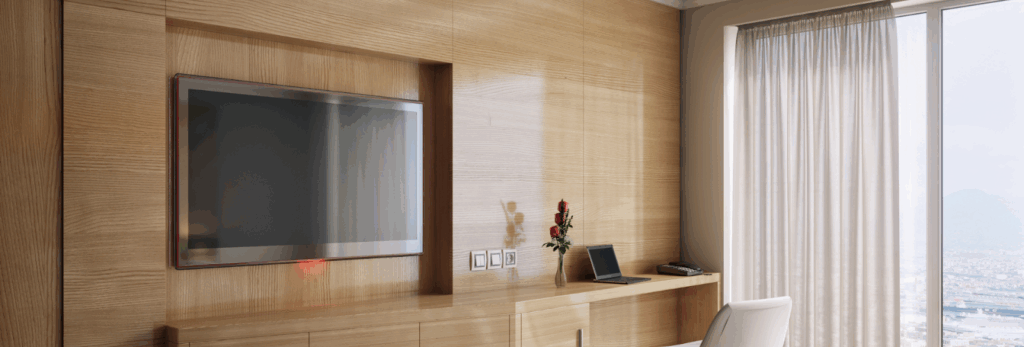
In hotels, acoustic curtains are valued for both comfort and luxury.
- Heavy blockout curtains reduce light and external traffic noise.
- Layered acoustic curtains between adjoining rooms improve privacy.
- Function rooms and meeting spaces benefit from perimeter curtains that reduce echo and cross-room noise.
- Aesthetic quality is equally important, and curtain systems should integrate discreetly into interior designs.
Best Practices for Acoustic Curtain Design
- Assess existing conditions
Begin with a thorough assessment of the space to understand its current acoustic profile. Measure background noise levels, reverberation times, and speech clarity. Identify the main sources of sound such as traffic, air-conditioning systems, or activity within an open-plan layout. Understanding these conditions helps guide fabric selection, curtain placement, and the overall acoustic design strategy. - Define goals
Establish the specific purpose of the curtain system. The aim may be to reduce external noise entering through windows, minimise internal echo in large rooms, or improve speech privacy between adjoining areas. Defining clear goals at the start ensures that every design choice supports both the acoustic performance and the aesthetic requirements of the space. - Select appropriate fabrics
Choose dense, multi-layer fabrics that have verified acoustic performance. Heavier materials absorb and block sound more effectively, while blackout or acoustic linings can further enhance insulation. Evaluate both visual and technical qualities, considering drape, texture, and colour as well as performance. - Design for full coverage
For best results, made-to-measure curtains should extend beyond window or wall openings and overlap surrounding surfaces. Aim for floor-to-ceiling coverage with minimal gaps along the top, sides, and bottom. Extra fullness, typically around twice the track width, increases sound absorption by providing greater surface area and depth. - Use strong, quiet tracks
Acoustic curtains are heavier than standard designs and require sturdy track systems. Choose high-quality tracks that move smoothly and quietly, ensuring effortless operation. Ceiling-mounted or recessed tracks not only look refined but also improve acoustic sealing. The mounting hardware must safely support the curtain’s weight and maintain alignment over time. - Integrate with other treatments
Curtains work best as part of a complete acoustic plan. Combine them with ceiling absorbers, wall panels, upholstered furniture, and soft floor coverings to achieve balance across different frequencies. A layered approach ensures that no single material bears all the responsibility for sound control. - Ensure compliance and safety
Confirm that all curtain fabrics and track systems meet the relevant Australian Standards, such as AS/NZS 1530.3 for fire safety. Check certifications from manufacturers and ensure products are approved for commercial applications. Compliance is essential for safety, durability, and insurance purposes in professional and public settings. - Test and adjust after installation
Once installed, measure reverberation times, sound reduction, and speech clarity to confirm performance. Fine-tune where needed by adjusting overlaps, adding returns, or applying additional lining. Post-installation testing ensures that the finished solution performs effectively under real conditions. - Maintain regularly
Schedule periodic maintenance to keep curtains functioning at their best. Inspect the tracks, check for fabric wear, and clean surfaces to prevent dust build-up, which can reduce effectiveness. Regular upkeep preserves both the acoustic qualities and visual appearance of the installation.
Limitations and Considerations
- Heavy multi-layer curtains may increase structural load and cost.
- Some high-performance fabrics may not suit every design scheme.
- Curtains are less effective for very low frequencies.
- Acoustic gains can be lost if gaps or detailing are poorly executed.
- Long-term maintenance is essential to prevent sagging and performance loss.
MAC Window Fashions – Australia’s Leading Custom Curtain Manufacturer and Wholesaler
Partnering with MAC Window Fashions ensures every project benefits from expert craftsmanship, proven performance, and tailored design support.
Our Australian-made curtains combine luxury with functionality, delivering acoustic comfort, light control, and durability for commercial environments such as offices, hotels, and boardrooms. Each curtain is custom-made to meet architectural specifications and relevant Australian Standards for safety and quality.
Our specialist team collaborates closely with designers, builders, and installers to provide end-to-end service, from fabric selection to precision installation on advanced curtain track systems. With a focus on aesthetics and technical excellence, MAC Window Fashions helps create interiors that look refined and perform beautifully. Whether you are specifying curtains for a corporate fit-out, hotel refurbishment, or high-end development, our expertise and extensive fabric library ensure the ideal combination of style, acoustic performance, and longevity. Partner with us today and explore our range of curtains, fabrics, and curtain track systems. Discover the difference of working with MAC Window Fashions!